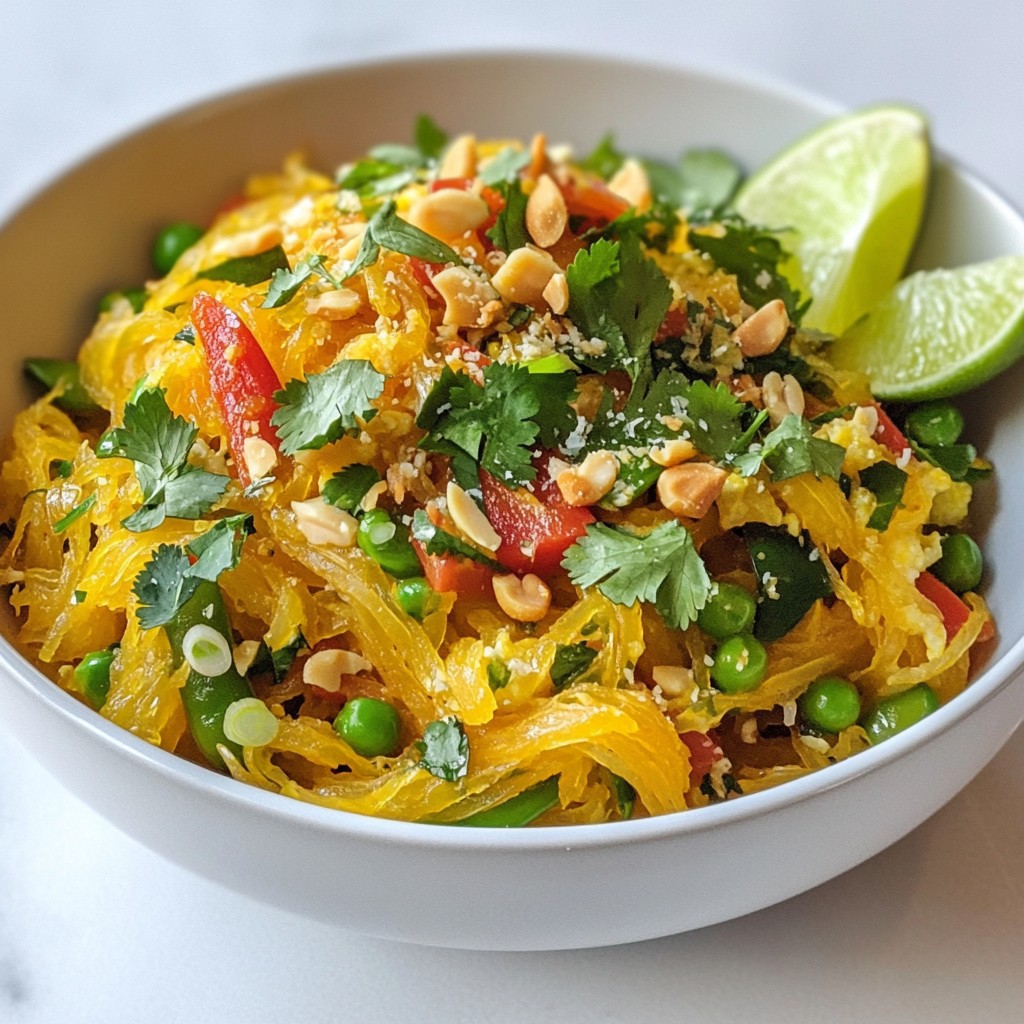
Are you ready to enjoy a healthy twist on a classic dish? My Spaghetti Squash Pad Thai is both flavorful and quick to make. This recipe is perfect for anyone looking to cut carbs without sacrificing taste. You’ll learn how to prepare spaghetti squash and stir-fry fresh veggies without fuss. Plus, I’ll share tips for customizations based on your dietary needs. Let’s dive into a delicious meal that’s sure to impress!
Why I Love This Recipe
- Healthy Twist: This Pad Thai uses spaghetti squash instead of traditional noodles, making it a lighter and healthier option without sacrificing flavor.
- Quick and Easy: With a total prep and cooking time of just one hour, this recipe is perfect for busy weeknights or a last-minute meal.
- Flavor Packed: The combination of creamy peanut butter, fresh lime juice, and aromatic vegetables creates a deliciously vibrant dish that’s hard to resist.
- Customizable: This recipe is versatile, allowing you to add your favorite proteins or vegetables to make it your own.
Ingredients
List of Ingredients
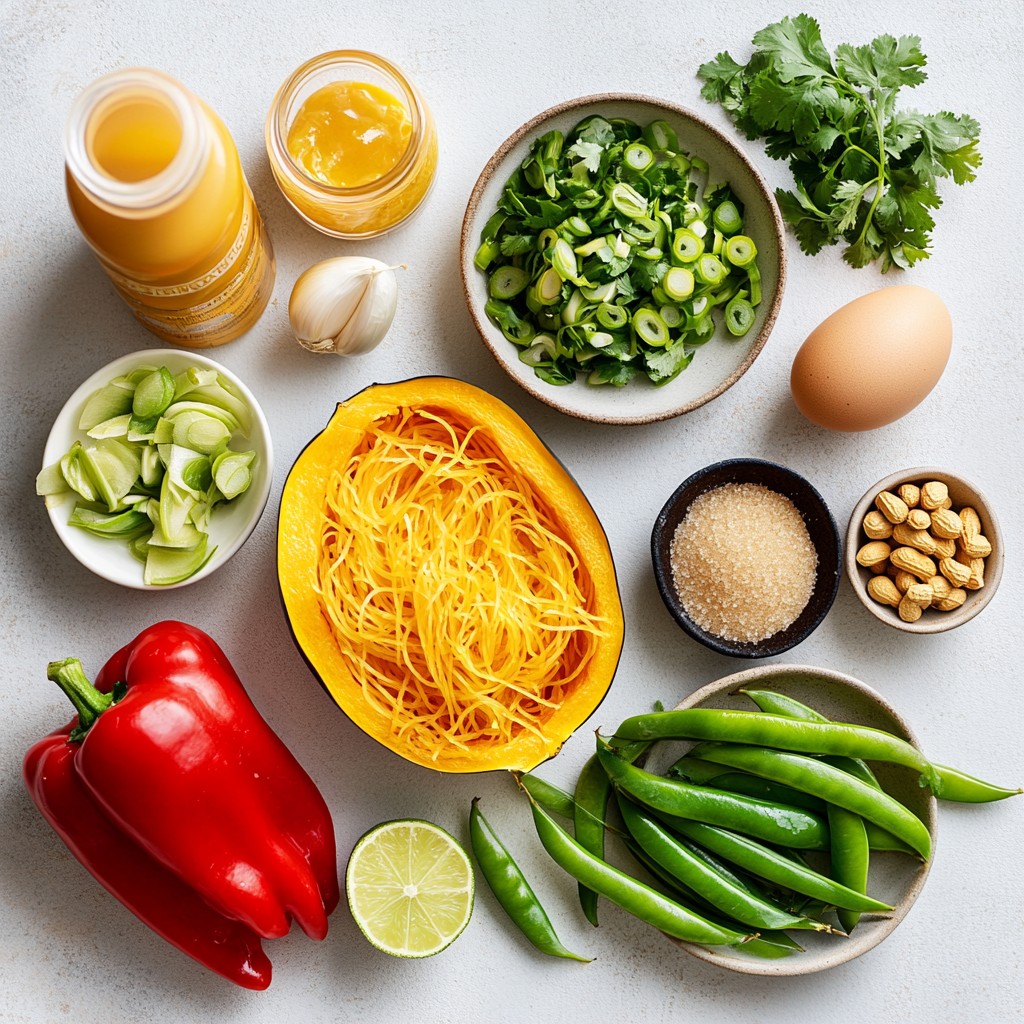
- 1 medium spaghetti squash
- 2 tablespoons sesame oil
- 3 cloves garlic, minced
- 1 small onion, thinly sliced
- 1 red bell pepper, thinly sliced
- 1 cup snap peas, trimmed
- 2 large eggs, lightly beaten
- 3 tablespoons creamy peanut butter
- 2 tablespoons soy sauce (or tamari for a gluten-free option)
- 2 tablespoons freshly squeezed lime juice
- 1 tablespoon brown sugar
- 1/4 cup chopped roasted peanuts
- 2 green onions, sliced
- Fresh cilantro, for garnish
- Lime wedges, for serving
- Salt and freshly ground black pepper, to taste
The main ingredients in this dish create a tasty and healthy meal. The spaghetti squash serves as a low-carb base. It transforms into fun, noodle-like strands when cooked. Sesame oil adds a rich, nutty flavor, while garlic and onion give a savory kick. The red bell pepper and snap peas add vibrant color and crunch. Eggs bring protein and a nice texture to the dish.
For customization, you can add other veggies like carrots or zucchini. If you prefer a spicier dish, feel free to add chili flakes or sriracha. You can replace peanut butter with sunflower seed butter if you have nut allergies. Tamari is a great swap for soy sauce if you're gluten-free.
This dish is flexible, so feel free to make it your own!
Step-by-Step Instructions
Preparing the Spaghetti Squash
To start, preheat your oven to 400°F (200°C). Carefully slice the spaghetti squash in half lengthwise. Use a spoon to scoop out the seeds. Place the squash cut-side down on a baking sheet lined with parchment paper. Roast in the oven for 30 to 40 minutes. You want it soft enough to pierce with a fork. When it’s ready, take it out and let it cool slightly. Use a fork to scrape the flesh into strands. This gives you that spaghetti-like texture.
Sautéing the Aromatics
Now, heat the sesame oil in a large skillet over medium heat. Add minced garlic and sliced onion to the pan. Stir them for about two minutes. Watch for the garlic to turn fragrant and the onion to soften. This is the key to starting your flavor base.
Adding the Vegetables
Next, toss in the sliced red bell pepper and trimmed snap peas. Stir-fry these for about three to four minutes. You want them to stay bright and crunchy. They should look vibrant and feel tender, but not mushy. This keeps your dish fresh and colorful.
Cooking the Eggs
Move the vegetable mix to one side of the skillet. Pour the beaten eggs into the empty space. Scramble the eggs gently until they are fully set. Once done, mix the eggs with the veggies. This adds a nice protein boost to your meal.
Making the Sauce
For the sauce, take a small bowl. Whisk together creamy peanut butter, soy sauce, lime juice, and brown sugar. Mix until smooth. This sauce ties all the flavors together. Taste it and adjust if needed. You can add more lime for tang or sugar for sweetness.
Incorporating Spaghetti Squash
Now it's time to fold in the spaghetti squash. Gently mix the strands into the skillet. Make sure they get coated well with the sauce. This ensures every bite is packed with flavor. Taste and season with salt and pepper as needed.
Serving the Pad Thai
Once everything is mixed, remove the skillet from heat. Transfer the Pad Thai to serving plates. Top it with chopped peanuts, sliced green onions, and fresh cilantro. Add lime wedges on the side for a zesty finish. For a beautiful presentation, serve in individual bowls. This makes it look even more appealing.
Tips & Tricks
Common Mistakes to Avoid
- Overcooking the spaghetti squash: Cook until just tender. Overcooked squash can get mushy. Aim for a fork to pierce the skin easily.
- Burning the garlic: Garlic can burn fast. Cook it for just two minutes. Keep stirring to avoid it sticking to the pan.
Enhancing Flavor
- Suggestions for spices and additional seasonings: Add crushed red pepper flakes for heat. Try fresh ginger for zest. A splash of fish sauce brings deep flavor.
- How to adjust the sauce for different tastes: Want it sweeter? Add more brown sugar. For more tang, squeeze in extra lime juice.
Cooking Techniques
- Using a wok vs. large skillet: A wok holds heat well and cooks fast. It gives great stir-fry results. A large skillet works too, just keep stirring.
- Best practices for stir-frying: Heat the oil before adding ingredients. Add items in batches for even cooking. Keep the heat high for a great sear.
Pro Tips
- Perfectly Roasted Squash: Ensure your spaghetti squash is roasted until tender but not mushy for the best texture in your Pad Thai.
- Egg Cooking Technique: Scramble the eggs in a separate space in the skillet to maintain their structure and prevent overcooking.
- Mixing the Sauce: For a creamier sauce, warm the peanut butter slightly before mixing it with the other sauce ingredients.
- Garnishing for Flavor: Don’t skip the fresh cilantro and lime wedges; they add brightness and balance to the dish.
Variations
Protein Additions
You can easily add protein to your Spaghetti Squash Pad Thai. Here are some tasty options:
- Chicken: Use cooked, diced chicken breast for a lean protein.
- Shrimp: Cooked shrimp adds a nice seafood touch.
- Tofu: For a plant-based choice, use firm tofu.
To incorporate these proteins, add them to the skillet after cooking the eggs. Stir them in well with the vegetables before adding the sauce.
Vegan/Vegetarian Options
If you want a plant-based dish, swap out the eggs for more veggies. Try these additions:
- Mushrooms: They add a nice umami flavor.
- Broccoli: This vegetable boosts nutrition and color.
- Carrots: Shredded carrots add sweetness and crunch.
These options help create a filling meal without losing the Pad Thai spirit.
Gluten-Free Adaptations
For a gluten-free dish, use tamari instead of soy sauce. Tamari tastes similar and works well. Consider these other gluten-free options:
- Rice noodles: Use them if you want more texture.
- Coconut aminos: This is a good soy sauce alternative.
Always check labels to ensure your ingredients are gluten-free.
Storage Info
How to Store Leftovers
To keep your Spaghetti Squash Pad Thai fresh, use airtight containers. Glass or plastic containers work well. Make sure to cool the dish to room temperature before sealing. Store it in the refrigerator for up to three days. If you want to keep it longer, freeze it. Use freezer-safe containers or bags. It can last up to three months in the freezer.
Reheating Instructions
When reheating, I recommend using the stovetop. Heat a pan on medium-low and add a splash of water or oil. Stir the Pad Thai often to heat it evenly. Avoid the microwave if you want to keep the texture. The microwave can make it soggy. If you must use it, cover the dish with a damp paper towel. This helps keep moisture in while reheating.
FAQs
Can I meal prep this dish?
Yes, you can meal prep Spaghetti Squash Pad Thai. Cook the spaghetti squash and store it in the fridge. You can also prepare the veggies in advance. Store them in airtight containers. Keep the sauce separate to prevent sogginess. When ready to eat, combine everything in a skillet and heat. This makes for a quick meal on busy days.
How do I know when the spaghetti squash is done?
Check the squash after 30-40 minutes of roasting. It’s done when you can pierce the skin easily with a fork. The flesh should be tender but not mushy. You should be able to scrape it into strands easily. If it feels firm, give it more time in the oven.
What can I substitute for peanut butter?
If you have nut allergies, try sunflower seed butter or tahini. Both work well in this dish. You can also use soy or coconut yogurt for a creamy sauce. Adjust the amount to match your taste. These options keep the dish creamy without nuts.
Is this dish low-carb?
Yes, Spaghetti Squash Pad Thai is low-carb. Spaghetti squash has fewer carbs than traditional pasta. It is high in fiber and low in calories, making it a great choice. This dish allows you to enjoy a hearty meal without the carbs. It’s perfect for anyone watching their carb intake.
How can I make this dish spicier?
To add heat, include red pepper flakes or sriracha in the sauce. You can also add sliced fresh chili peppers during cooking. Taste as you go to find your perfect level of spice. Adjust it based on your heat preference for a personalized dish.
You’ve learned how to make a delicious Pad Thai using spaghetti squash. We covered essential ingredients, step-by-step cooking, and how to enhance flavor. Remember, customizing and experimenting will make this dish your own. Don’t shy away from trying new vegetables or proteins. Storing and reheating tips ensure your leftovers stay tasty. Keep these techniques in mind, and soon, you'll create Pad Thai that impresses everyone. Enjoy your cooking adventures!