If you crave a tasty dip that's easy to make, you've come to the right spot! My Roasted Red Pepper Hummus recipe blends bold flavors and creamy textures that enhance any snack. Whether you're hosting friends or just treating yourself, this simple recipe has you covered. In this post, I'll walk you through every step, from gathering fresh ingredients to serving suggestions. Let's get started on your new favorite dip!
Why I Love This Recipe
- Delicious Flavor Combination: The blend of roasted red pepper with creamy chickpeas creates a rich and savory taste that is irresistible.
- Quick and Easy Preparation: This hummus can be whipped up in just 10 minutes, making it a perfect last-minute snack or appetizer.
- Versatile Serving Options: Pair it with pita, veggies, or crackers for a delightful spread that suits any occasion.
- Healthy and Nutritious: Packed with protein and healthy fats, this hummus is a guilt-free indulgence that keeps you satisfied.
Ingredients
List of Ingredients
- 1 can (15 oz) of chickpeas, thoroughly drained and rinsed
- 1 large roasted red pepper, skin removed and seeds discarded
- 2 tablespoons tahini (sesame seed paste)
- 2 tablespoons extra virgin olive oil
- 2 tablespoons freshly squeezed lemon juice
- 2 cloves garlic, finely minced
- 1 teaspoon ground cumin
- Salt, to taste
- Water, as needed to achieve the preferred consistency
- Paprika and freshly chopped parsley, for garnishing
Using fresh or canned ingredients can change the taste. I like canned chickpeas for ease. They save time and still taste great. Fresh roasted red peppers add richer flavor. You can roast them at home for a smoky taste. Just roast them over an open flame or in the oven until the skin chars, then peel off the skin.
Tahini is key for creaminess. It’s made from sesame seeds. If you can’t find tahini, you can skip it, but the flavor will change. Fresh lemon juice gives a bright kick. Always use fresh lemon for the best taste.
Garlic adds depth and warmth. Mince it finely to spread its flavor evenly. Ground cumin adds a warm, earthy note. Adjust salt to your taste.
Lastly, water helps achieve the right texture. Add it slowly to avoid making the hummus too runny. Garnish with paprika and parsley for a nice look and extra flavor.
Step-by-Step Instructions
Preparation Steps
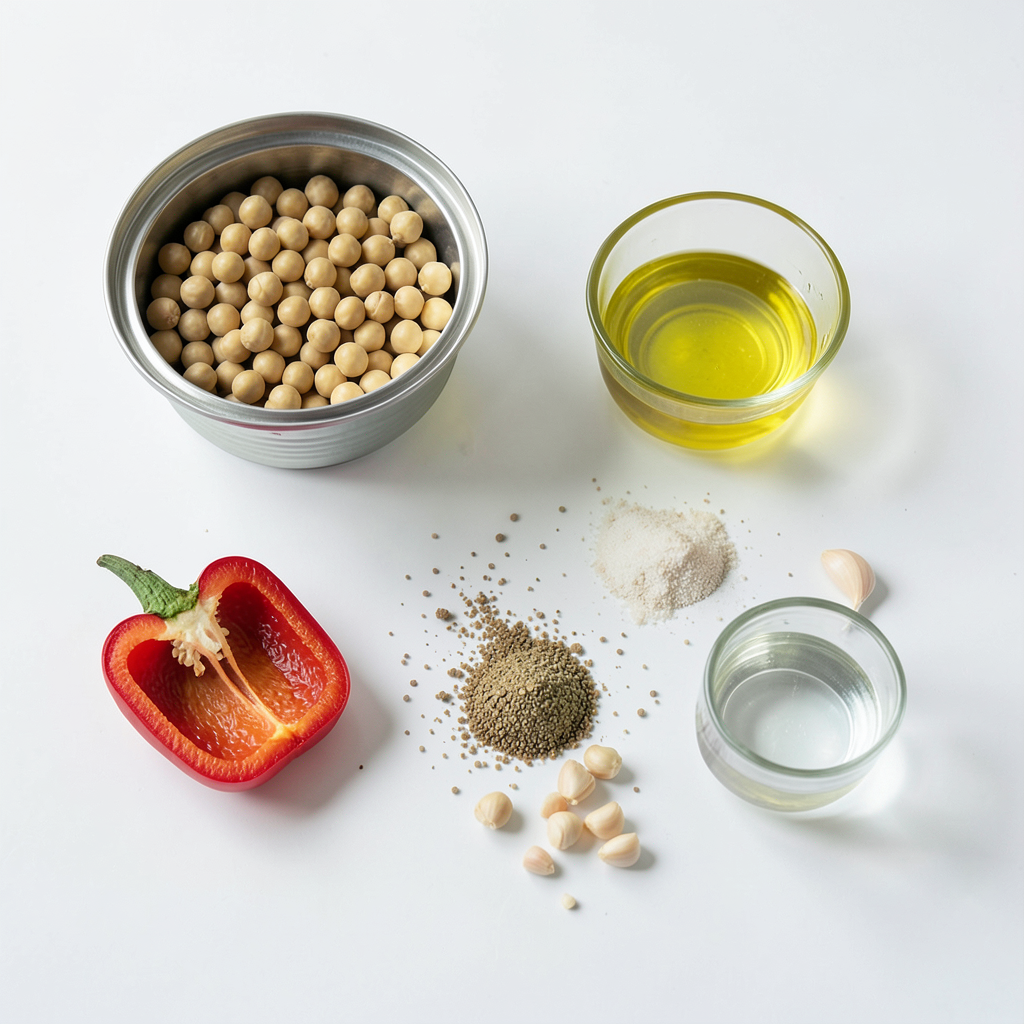
1. First, gather all your ingredients. You need chickpeas, roasted red pepper, tahini, olive oil, lemon juice, garlic, cumin, and salt.
2. In your food processor, add the drained chickpeas and the roasted red pepper. Make sure the skin is off and the seeds are gone.
3. Next, pour in the tahini, olive oil, lemon juice, minced garlic, cumin, and a pinch of salt.
4. Blend the mixture on high speed. Stop to scrape down the sides. This ensures everything mixes well.
5. If the hummus is too thick, add water. Pour in one tablespoon at a time. Blend after each addition until you reach the creaminess you like.
6. Taste your hummus. Adjust the seasoning. Add more salt, lemon juice, or cumin if you want a bolder flavor.
7. Once everything is smooth, transfer the hummus to a nice bowl.
Presentation Tips
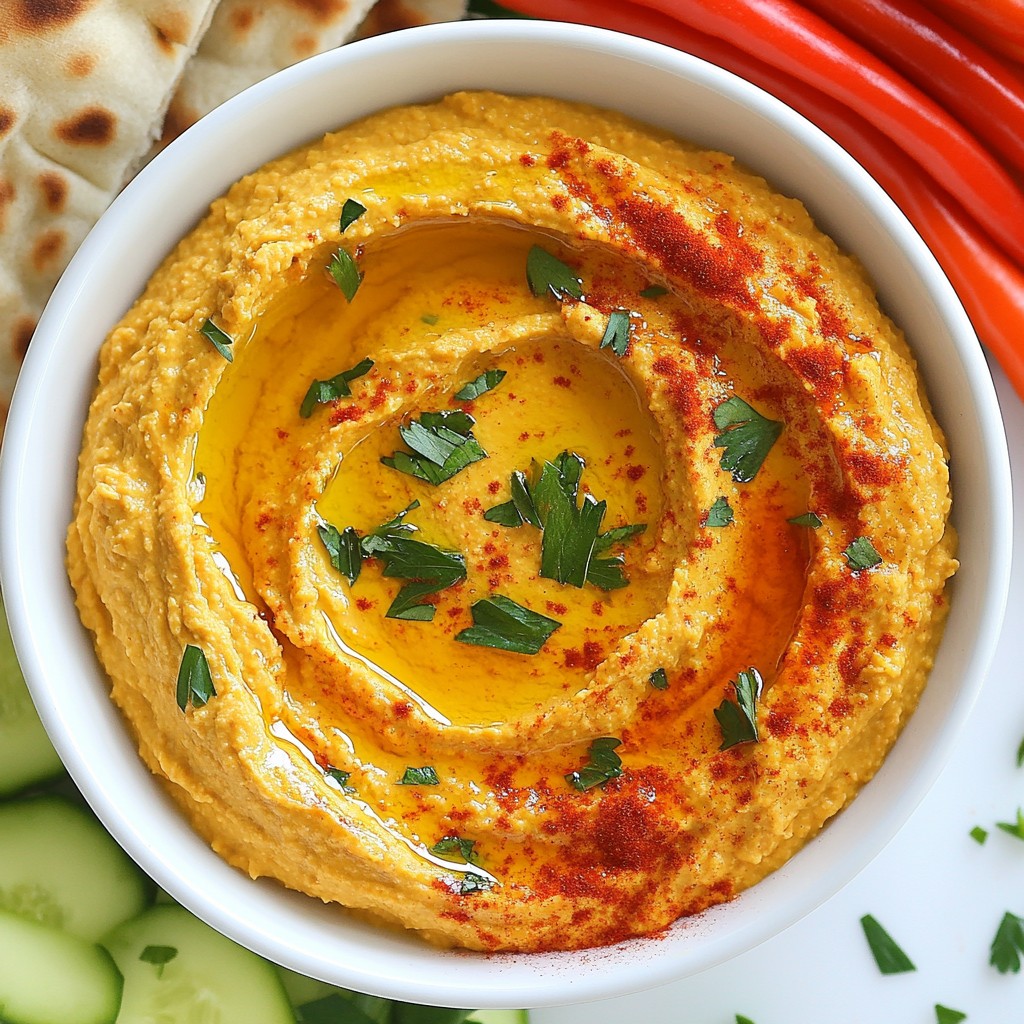
1. For garnishing, drizzle some extra virgin olive oil on top. Sprinkle paprika and fresh parsley for color.
2. Serve your hummus with colorful fresh veggies like carrots, cucumbers, and bell peppers.
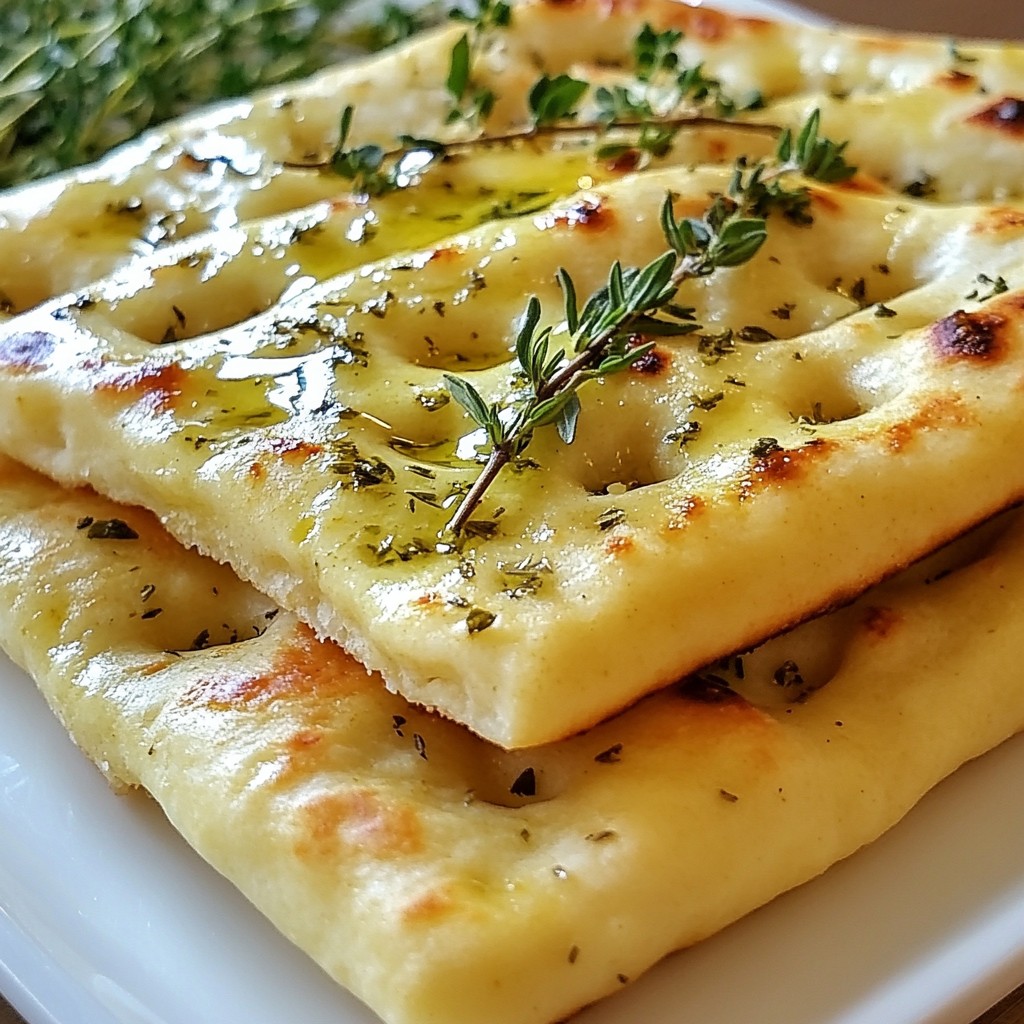
3. You can also use warm pita bread or crunchy crackers. Arrange them around the bowl for a pretty platter.
4. This makes a great appetizer for parties or a healthy snack at home. Enjoy!
Tips & Tricks
Best Practices for Homemade Hummus
- Importance of ingredient quality: Use the best ingredients you can find. Fresh chickpeas are great, but canned ones work well too. Choose organic tahini for rich flavor. Fresh lemon juice adds brightness. High-quality olive oil makes a big difference too.
- Tips for roasting red peppers at home: Roasting peppers is easy. Start by washing them. Place them on a baking sheet. Set your oven to 450°F (230°C). Roast for about 20-25 minutes. Turn them halfway for even cooking. When done, let them cool. The skin will peel off easily. Remove the seeds and stems before use.
Common Mistakes to Avoid
- Overprocessing vs. underprocessing: Blend your hummus just right. If you blend too much, it becomes thin and runny. If you don't blend enough, it will be chunky. Aim for a smooth and creamy texture.
- Balancing flavors: Taste is key! Add salt and lemon juice slowly. Adjust to your liking. If it tastes flat, try more lemon or cumin. A little extra olive oil can enhance richness too.
Pro Tips
- Use Fresh Ingredients: Opt for fresh garlic and lemons to enhance the flavor of your hummus. Fresh ingredients provide a vibrant taste that elevates the overall dish.
- Experiment with Flavors: Feel free to add other ingredients like roasted garlic, sun-dried tomatoes, or herbs to customize your hummus. This can give it a unique twist that suits your palate.
- Perfect Consistency: If you prefer a creamier texture, adding a bit of ice-cold water while blending can help achieve that smoothness without compromising flavor.
- Garnishing for Appeal: Elevate the presentation by garnishing with a sprinkle of sesame seeds or drizzling balsamic glaze alongside the olive oil. This adds both flavor and visual appeal.
Variations
Flavor Add-Ins
You can easily change up your roasted red pepper hummus with fun flavors. Here are two great ideas:
- Spicy roasted red pepper hummus: Add a pinch of cayenne pepper or some chopped jalapeños. Blend them in with the other ingredients. This gives a nice kick that spice lovers will enjoy.
- Herb-infused variations: Try adding fresh herbs like basil, parsley, or cilantro. Just chop them finely and mix them in. This adds freshness and depth to the hummus.
Dietary Adaptations
This roasted red pepper hummus is easy to adapt for different diets:
- Vegan options: This recipe is already vegan! All the ingredients are plant-based, so everyone can enjoy it.
- Gluten-free serving suggestions: Hummus is naturally gluten-free. Serve it with veggie sticks, gluten-free crackers, or rice cakes for a tasty snack.
Storage Info
How to Store Hummus
To keep your roasted red pepper hummus fresh, store it in the fridge. Use an airtight container. Make sure the lid is tight to prevent air from getting in. This helps keep the hummus creamy. It will stay good in the fridge for about 5 to 7 days. If you want to keep it longer, freezing is a great option.
To freeze hummus, put it in a freezer-safe container. Leave some space at the top for expansion. This way, it won’t crack. You can freeze it for up to 3 months. When you’re ready to eat it, thaw it in the fridge overnight.
Shelf Life
Hummus can spoil. Look for signs to know if it's still good. If you see mold or an off smell, throw it away. The texture may also change. Good hummus should be smooth and creamy. If it feels gritty or too dry, it’s best to discard it.
You can also check the taste. If it tastes sour or very different, do not eat it. Following these tips will help you enjoy your hummus safely!
FAQs
How to adjust seasoning in hummus?
To adjust seasoning in hummus, taste it first. If it lacks flavor, add salt or lemon juice. Blend well after each addition. You can also add more cumin for a deeper taste. This way, you create a flavor that suits your preference.
Can I use dried chickpeas instead of canned?
Yes, you can use dried chickpeas. Soak them overnight in water. Then, cook them until soft. This takes longer than using canned chickpeas, but it can enhance the flavor. Just remember to drain and rinse them before blending.
What are the health benefits of roasted red pepper hummus?
Roasted red pepper hummus is rich in nutrients. It has fiber from chickpeas, which aids digestion. The red peppers add vitamins A and C. Tahini offers healthy fats and protein. Overall, it supports heart health and boosts your immune system.
How long does roasted red pepper hummus last in the fridge?
Roasted red pepper hummus lasts about 5 to 7 days in the fridge. Store it in an airtight container. Always check for any off smells or changes in texture before eating. If it looks or smells bad, it’s best to toss it.
Can I make hummus without tahini?
Yes, you can make hummus without tahini. You can replace it with yogurt or even skip it entirely. Just add a bit more olive oil for creaminess. The hummus will still taste great and be smooth without tahini.
In this post, we covered how to make hummus, from choosing the right ingredients to serving tips. You learned about fresh versus canned options, blending techniques, and common mistakes to avoid. We also explored variations, including flavor add-ins and dietary adaptations. Remember, quality ingredients matter. Store your hummus properly to maximize freshness. With these steps, you can create delicious hummus that suits your taste. Enjoy experimenting in the kitchen and sharing your tasty creations!