
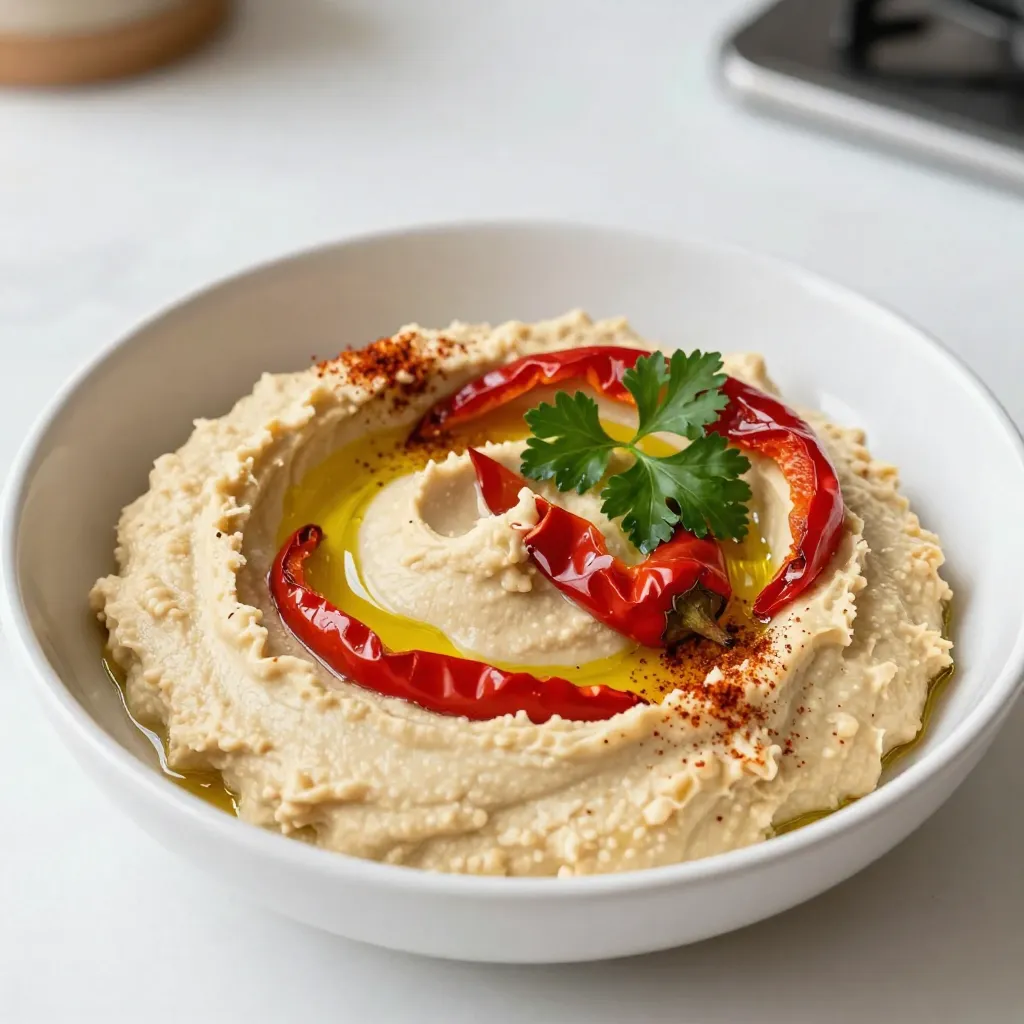
Roasted Red Pepper Hummus Simple and Creamy Recipe

WANT TO SAVE THIS RECIPE?

Welcome to the world of delicious dips! Today, we’re diving into a simple and creamy recipe for Roasted Red Pepper Hummus. This flavorful spread is perfect for snacks, appetizers, or party platters. With a few key ingredients like chickpeas, tahini, and roasted red peppers, you can create a mouthwatering dish in no time. Join me as we explore the steps, tips, and variations to elevate your hummus game!

- 1 can (15 oz) chickpeas, drained and thoroughly rinsed - 2 large roasted red peppers (store-bought or homemade) - 3 tablespoons tahini Chickpeas are the base of this hummus. They add creaminess and protein. I prefer using canned chickpeas for ease. Just drain and rinse them well. Roasted red peppers bring a sweet, smoky flavor. You can buy them in a jar or roast your own. Tahini gives hummus its rich, nutty taste. It's made from ground sesame seeds. - 2 tablespoons extra-virgin olive oil, plus extra for drizzling - 2 tablespoons freshly squeezed lemon juice - 1 clove garlic, finely minced Olive oil adds smoothness and richness. It also enhances the flavor of every bite. Fresh lemon juice gives a tangy kick, brightening the dish. Garlic adds depth and warmth to the hummus. Use fresh garlic for the best taste. - 1 teaspoon ground cumin - Kosher salt and freshly cracked pepper to taste - Smoked paprika and finely chopped fresh parsley for garnish Ground cumin adds an earthy note. It pairs well with the sweetness of the peppers. Salt and pepper are key to enhancing all the flavors. Smoked paprika adds a lovely color and a hint of smoke. Fresh parsley adds a pop of green and freshness on top. {{ingredient_image_2}} You can use jarred roasted red peppers or make your own. Jarred peppers are quick and easy. Just drain them well to avoid too much moisture in your hummus. If you want to roast fresh peppers, here’s how to do it: 1. Broil the Peppers: Place fresh red peppers under the broiler. Turn them often until the skin is black and blistered. This should take about 15 minutes. 2. Steam and Peel: After broiling, put the peppers in a bowl and cover it with plastic wrap. Let them steam for 15 minutes. This helps loosen the skin. Once they cool, peel off the blackened skin, remove the seeds, and slice them. Next, gather your ingredients for the food processor: - 1 can (15 oz) chickpeas, drained and rinsed - 2 large roasted red peppers - 3 tablespoons tahini - 2 tablespoons extra-virgin olive oil - 2 tablespoons lemon juice - 1 clove garlic, minced - 1 teaspoon ground cumin - Salt and pepper to taste It's crucial to drain the chickpeas well. This step keeps the hummus from becoming too watery. Now it’s time to blend! Add all your ingredients to the food processor. Pulse the mixture until it’s smooth and creamy. This might take a minute or two. If you find the hummus too thick, slowly add a tablespoon of water. Blend after each addition until it reaches your desired texture. After blending, taste your hummus. You may want to add more salt, pepper, or lemon juice. Adjust the flavors to suit your taste. This step is key to making the hummus just right. To serve, spoon the hummus into a nice bowl. Create a small well in the center. Drizzle extra olive oil on top. For a colorful finish, sprinkle smoked paprika and chopped parsley over it. For a fun touch, serve the hummus with warm pita bread or crunchy veggie sticks. You can also place it on a rustic wooden board for a more inviting setup. To get a creamy hummus, start with the right chickpeas. Use canned chickpeas for ease. Drain and rinse them well. This step removes extra salt and helps with texture. You want your hummus smooth, not chunky. If your hummus is too thick, add a little water. Blend after each addition. This helps you control the thickness. Avoid adding too much at once. It’s easy to go overboard. Common mistakes include not blending enough. If you stop too early, your hummus will be gritty. Remember to scrape the bowl sides while blending. This ensures everything mixes well. If you don’t have tahini, use sunflower seed butter. It gives a similar creaminess. For olive oil, try avocado oil for a different flavor. This can make your hummus taste unique. You can also adjust spices. Add a pinch of cayenne pepper for heat. Or mix in fresh herbs like basil or cilantro for a fresh twist. Experiment with flavors to find your favorite. Presentation matters! Serve your hummus in a deep bowl. Create a little well in the center. Drizzle extra olive oil there for a nice touch. For garnishes, sprinkle smoked paprika on top. This adds color and flavor. Chopped parsley brightens up the dish too. To serve, pair your hummus with warm pita or crunchy veggie sticks. You can arrange these on a wooden board for a rustic look. Small bowls also work well for an inviting spread. Pro Tips Choose Quality Ingredients: Opt for high-quality tahini and fresh lemons for the best flavor. The quality of your ingredients directly impacts the final taste of your hummus. Experiment with Flavors: Feel free to add other ingredients like roasted garlic, sun-dried tomatoes, or herbs to customize the flavor of your hummus and make it uniquely yours. Perfect Texture: To achieve a silky smooth hummus, consider peeling the chickpeas. While it's an extra step, it can result in a creamier consistency. Storage Tips: Store any leftover hummus in an airtight container in the refrigerator. Drizzle a layer of olive oil on top to keep it fresh for up to a week. {{image_4}} You can easily change the flavor of your hummus. One great way is to add fresh herbs. Herbs like basil or cilantro can add a bright taste. Simply chop them finely and blend them in. If you love spice, try adding jalapeños. You can use fresh or pickled ones for a kick. Just add a small amount first, then blend and taste. Adjust until it’s just right for you. Making hummus is easy for different diets. This recipe is naturally gluten-free. All the main ingredients are safe for those avoiding gluten. For those who follow a vegan diet, this hummus is perfect. Each ingredient is plant-based, so you can enjoy it without worry. You can share it with friends who have dietary needs too! Hummus can be fun to change with the seasons. You can add seasonal vegetables or herbs. In spring, consider adding fresh peas or mint. In fall, roasted butternut squash or sage can give a warm flavor. Think about what’s fresh at your local market. This keeps your hummus exciting and tasty all year! To store your homemade roasted red pepper hummus, use an airtight container. Keep it in the fridge right after making it. This helps keep it fresh. Your hummus will last about five days in the fridge. Make sure to check for any signs of spoilage before eating. If you want to store it longer, freezing is a great option. Use a freezer-safe container or bag. Leave some space for expansion, as it may get bigger when frozen. You can freeze hummus for up to three months. When ready to eat, thaw it in the fridge overnight and stir well before serving. When buying hummus from the store, look for a few key things. Check the label for natural ingredients. The best hummus has no artificial flavors or preservatives. You want to see chickpeas, tahini, and roasted red peppers listed first. Also, pay attention to the sell-by date. Fresh hummus has a shorter shelf life than other dips. If you can, taste a sample before buying. This helps you know if it has the flavor and creaminess you want. How long does roasted red pepper hummus last? Homemade hummus lasts about five days in the fridge. Store-bought hummus usually lasts longer, often around a week or two. Watch for signs of spoilage. If you see any mold or it smells off, throw it away. Changes in color or texture can also mean it is time to discard it. Always trust your senses when it comes to food safety. Yes, you can make hummus ahead of time. To do this, store it in an airtight container. Keep it in the fridge for up to five days. To make it taste fresh, add a little olive oil on top before serving. This helps keep it moist. Stir it well before serving for the best taste. Roasted red pepper hummus pairs well with many snacks. Here are some great options: - Warm pita bread - Vegetable sticks like carrots, cucumbers, and bell peppers - Crispy pita chips - Crackers - Fresh bread or baguette slices These pairings make it fun for any gathering or snack time. Yes, roasted red pepper hummus is quite healthy. It’s packed with nutrients. Here are some benefits: - Chickpeas provide protein and fiber. - Tahini adds healthy fats and minerals. - Red peppers are rich in vitamins A and C. This makes hummus a smart choice for a tasty snack. If your hummus is too thick, don't worry. You can fix it easily. Add a little water, one tablespoon at a time. Blend after each addition until you reach the right texture. You can also add more olive oil or lemon juice for extra flavor. Yes, canned roasted red peppers are great to use. They save time and are easy to find. Just make sure to drain them well. This helps avoid extra moisture in your hummus. You can enjoy the same great flavor without the extra work of roasting your own. In this article, we explored how to make delicious roasted red pepper hummus. We covered key ingredients like chickpeas, tahini, and spices. I shared step-by-step instructions for preparation and blending. You learned tips for the perfect texture and flavor. Variations allow for fun options to suit your taste. Finally, proper storage ensures your hummus stays fresh. Enjoy experimenting with this healthy dip; it’s simple and rewarding to make. Hummus can be a great addition to your meals or parties.

Why I Love This Recipe

  1. Flavorful Combination: The blend of roasted red peppers and chickpeas creates a rich and savory flavor that’s hard to resist.
  2. Quick and Easy: This recipe can be prepared in just 10 minutes, making it perfect for last-minute gatherings or snacks.
  3. Nutritious and Healthy: Packed with protein and healthy fats, this hummus is a guilt-free indulgence that you can enjoy anytime.
  4. Versatile Serving Options: It pairs wonderfully with pita bread, veggies, or can be enjoyed as a spread on sandwiches.

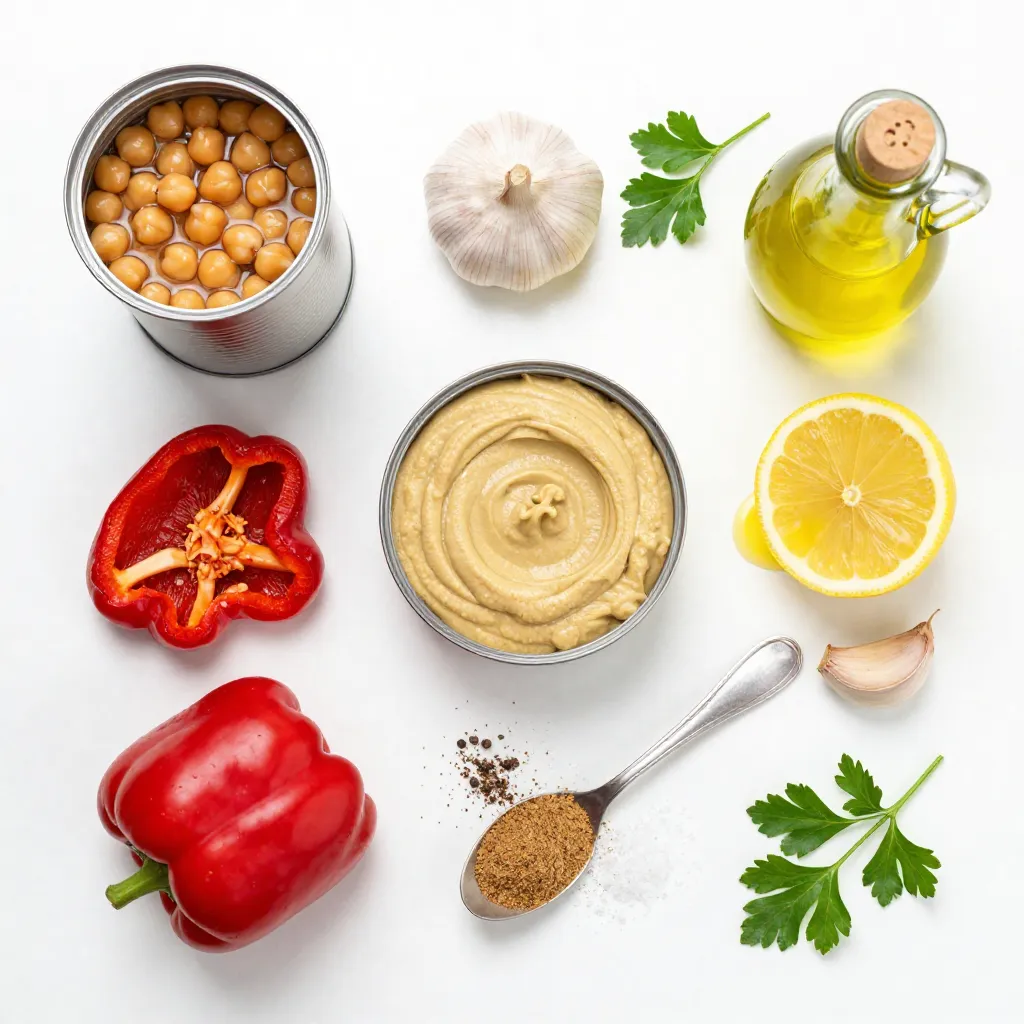
Ingredients

Main Ingredients

– 1 can (15 oz) chickpeas, drained and thoroughly rinsed

– 2 large roasted red peppers (store-bought or homemade)

– 3 tablespoons tahini

Chickpeas are the base of this hummus. They add creaminess and protein. I prefer using canned chickpeas for ease. Just drain and rinse them well. Roasted red peppers bring a sweet, smoky flavor. You can buy them in a jar or roast your own. Tahini gives hummus its rich, nutty taste. It’s made from ground sesame seeds.

Additional Flavor Enhancers

– 2 tablespoons extra-virgin olive oil, plus extra for drizzling

– 2 tablespoons freshly squeezed lemon juice

– 1 clove garlic, finely minced

Olive oil adds smoothness and richness. It also enhances the flavor of every bite. Fresh lemon juice gives a tangy kick, brightening the dish. Garlic adds depth and warmth to the hummus. Use fresh garlic for the best taste.

Seasoning

– 1 teaspoon ground cumin

– Kosher salt and freshly cracked pepper to taste

– Smoked paprika and finely chopped fresh parsley for garnish

Ground cumin adds an earthy note. It pairs well with the sweetness of the peppers. Salt and pepper are key to enhancing all the flavors. Smoked paprika adds a lovely color and a hint of smoke. Fresh parsley adds a pop of green and freshness on top.
Step-by-Step Instructions

Preparing Roasted Red Peppers

You can use jarred roasted red peppers or make your own. Jarred peppers are quick and easy. Just drain them well to avoid too much moisture in your hummus. If you want to roast fresh peppers, here’s how to do it:

1. Broil the Peppers: Place fresh red peppers under the broiler. Turn them often until the skin is black and blistered. This should take about 15 minutes.

2. Steam and Peel: After broiling, put the peppers in a bowl and cover it with plastic wrap. Let them steam for 15 minutes. This helps loosen the skin. Once they cool, peel off the blackened skin, remove the seeds, and slice them.

Combining Ingredients

Next, gather your ingredients for the food processor:

– 1 can (15 oz) chickpeas, drained and rinsed

– 2 large roasted red peppers

– 3 tablespoons tahini

– 2 tablespoons extra-virgin olive oil

– 2 tablespoons lemon juice

– 1 clove garlic, minced

– 1 teaspoon ground cumin

– Salt and pepper to taste

It’s crucial to drain the chickpeas well. This step keeps the hummus from becoming too watery.

Blending for Smoothness

Now it’s time to blend! Add all your ingredients to the food processor. Pulse the mixture until it’s smooth and creamy. This might take a minute or two. If you find the hummus too thick, slowly add a tablespoon of water. Blend after each addition until it reaches your desired texture.

Tasting and Adjusting Seasoning

After blending, taste your hummus. You may want to add more salt, pepper, or lemon juice. Adjust the flavors to suit your taste. This step is key to making the hummus just right.

Serving and Garnishing

To serve, spoon the hummus into a nice bowl. Create a small well in the center. Drizzle extra olive oil on top. For a colorful finish, sprinkle smoked paprika and chopped parsley over it.

For a fun touch, serve the hummus with warm pita bread or crunchy veggie sticks. You can also place it on a rustic wooden board for a more inviting setup.

Tips & Tricks

Perfecting Your Hummus Texture

To get a creamy hummus, start with the right chickpeas. Use canned chickpeas for ease. Drain and rinse them well. This step removes extra salt and helps with texture. You want your hummus smooth, not chunky.

If your hummus is too thick, add a little water. Blend after each addition. This helps you control the thickness. Avoid adding too much at once. It’s easy to go overboard.

Common mistakes include not blending enough. If you stop too early, your hummus will be gritty. Remember to scrape the bowl sides while blending. This ensures everything mixes well.

Ingredient Substitutions

If you don’t have tahini, use sunflower seed butter. It gives a similar creaminess. For olive oil, try avocado oil for a different flavor. This can make your hummus taste unique.

You can also adjust spices. Add a pinch of cayenne pepper for heat. Or mix in fresh herbs like basil or cilantro for a fresh twist. Experiment with flavors to find your favorite.

Enhancing Presentation

Presentation matters! Serve your hummus in a deep bowl. Create a little well in the center. Drizzle extra olive oil there for a nice touch.

For garnishes, sprinkle smoked paprika on top. This adds color and flavor. Chopped parsley brightens up the dish too.

To serve, pair your hummus with warm pita or crunchy veggie sticks. You can arrange these on a wooden board for a rustic look. Small bowls also work well for an inviting spread.

Pro Tips

  1. Choose Quality Ingredients: Opt for high-quality tahini and fresh lemons for the best flavor. The quality of your ingredients directly impacts the final taste of your hummus.
  2. Experiment with Flavors: Feel free to add other ingredients like roasted garlic, sun-dried tomatoes, or herbs to customize the flavor of your hummus and make it uniquely yours.
  3. Perfect Texture: To achieve a silky smooth hummus, consider peeling the chickpeas. While it’s an extra step, it can result in a creamier consistency.
  4. Storage Tips: Store any leftover hummus in an airtight container in the refrigerator. Drizzle a layer of olive oil on top to keep it fresh for up to a week.

Variations

Flavored Hummus Options

You can easily change the flavor of your hummus. One great way is to add fresh herbs. Herbs like basil or cilantro can add a bright taste. Simply chop them finely and blend them in. If you love spice, try adding jalapeños. You can use fresh or pickled ones for a kick. Just add a small amount first, then blend and taste. Adjust until it’s just right for you.

Dietary Adaptations

Making hummus is easy for different diets. This recipe is naturally gluten-free. All the main ingredients are safe for those avoiding gluten. For those who follow a vegan diet, this hummus is perfect. Each ingredient is plant-based, so you can enjoy it without worry. You can share it with friends who have dietary needs too!

Seasonal Variations

Hummus can be fun to change with the seasons. You can add seasonal vegetables or herbs. In spring, consider adding fresh peas or mint. In fall, roasted butternut squash or sage can give a warm flavor. Think about what’s fresh at your local market. This keeps your hummus exciting and tasty all year!

Storage Info

Storage Guidelines for Homemade Hummus

To store your homemade roasted red pepper hummus, use an airtight container. Keep it in the fridge right after making it. This helps keep it fresh. Your hummus will last about five days in the fridge. Make sure to check for any signs of spoilage before eating.

If you want to store it longer, freezing is a great option. Use a freezer-safe container or bag. Leave some space for expansion, as it may get bigger when frozen. You can freeze hummus for up to three months. When ready to eat, thaw it in the fridge overnight and stir well before serving.

Buying Store-Bought Hummus

When buying hummus from the store, look for a few key things. Check the label for natural ingredients. The best hummus has no artificial flavors or preservatives. You want to see chickpeas, tahini, and roasted red peppers listed first.

Also, pay attention to the sell-by date. Fresh hummus has a shorter shelf life than other dips. If you can, taste a sample before buying. This helps you know if it has the flavor and creaminess you want.

Shelf Life

How long does roasted red pepper hummus last? Homemade hummus lasts about five days in the fridge. Store-bought hummus usually lasts longer, often around a week or two.

Watch for signs of spoilage. If you see any mold or it smells off, throw it away. Changes in color or texture can also mean it is time to discard it. Always trust your senses when it comes to food safety.

FAQs

Can I make hummus in advance?

Yes, you can make hummus ahead of time. To do this, store it in an airtight container. Keep it in the fridge for up to five days. To make it taste fresh, add a little olive oil on top before serving. This helps keep it moist. Stir it well before serving for the best taste.

What do I serve with roasted red pepper hummus?

Roasted red pepper hummus pairs well with many snacks. Here are some great options:

– Warm pita bread

– Vegetable sticks like carrots, cucumbers, and bell peppers

– Crispy pita chips

– Crackers

– Fresh bread or baguette slices

These pairings make it fun for any gathering or snack time.

Is roasted red pepper hummus healthy?

Yes, roasted red pepper hummus is quite healthy. It’s packed with nutrients. Here are some benefits:

– Chickpeas provide protein and fiber.

– Tahini adds healthy fats and minerals.

– Red peppers are rich in vitamins A and C.

This makes hummus a smart choice for a tasty snack.

How do I prevent my hummus from being too thick?

If your hummus is too thick, don’t worry. You can fix it easily. Add a little water, one tablespoon at a time. Blend after each addition until you reach the right texture. You can also add more olive oil or lemon juice for extra flavor.

Can I use canned roasted red peppers?

Yes, canned roasted red peppers are great to use. They save time and are easy to find. Just make sure to drain them well. This helps avoid extra moisture in your hummus. You can enjoy the same great flavor without the extra work of roasting your own.

In this article, we explored how to make delicious roasted red pepper hummus. We covered key ingredients like chickpeas, tahini, and spices. I shared step-by-step instructions for preparation and blending. You learned tips for the perfect texture and flavor. Variations allow for fun options to suit your taste. Finally, proper storage ensures your hummus stays fresh. Enjoy experimenting with this healthy dip; it’s simple and rewarding to make. Hummus can be a great addition to your meals or partie

- 1 can (15 oz) chickpeas, drained and thoroughly rinsed - 2 large roasted red peppers (store-bought or homemade) - 3 tablespoons tahini Chickpeas are the base of this hummus. They add creaminess and protein. I prefer using canned chickpeas for ease. Just drain and rinse them well. Roasted red peppers bring a sweet, smoky flavor. You can buy them in a jar or roast your own. Tahini gives hummus its rich, nutty taste. It's made from ground sesame seeds. - 2 tablespoons extra-virgin olive oil, plus extra for drizzling - 2 tablespoons freshly squeezed lemon juice - 1 clove garlic, finely minced Olive oil adds smoothness and richness. It also enhances the flavor of every bite. Fresh lemon juice gives a tangy kick, brightening the dish. Garlic adds depth and warmth to the hummus. Use fresh garlic for the best taste. - 1 teaspoon ground cumin - Kosher salt and freshly cracked pepper to taste - Smoked paprika and finely chopped fresh parsley for garnish Ground cumin adds an earthy note. It pairs well with the sweetness of the peppers. Salt and pepper are key to enhancing all the flavors. Smoked paprika adds a lovely color and a hint of smoke. Fresh parsley adds a pop of green and freshness on top. {{ingredient_image_2}} You can use jarred roasted red peppers or make your own. Jarred peppers are quick and easy. Just drain them well to avoid too much moisture in your hummus. If you want to roast fresh peppers, here’s how to do it: 1. Broil the Peppers: Place fresh red peppers under the broiler. Turn them often until the skin is black and blistered. This should take about 15 minutes. 2. Steam and Peel: After broiling, put the peppers in a bowl and cover it with plastic wrap. Let them steam for 15 minutes. This helps loosen the skin. Once they cool, peel off the blackened skin, remove the seeds, and slice them. Next, gather your ingredients for the food processor: - 1 can (15 oz) chickpeas, drained and rinsed - 2 large roasted red peppers - 3 tablespoons tahini - 2 tablespoons extra-virgin olive oil - 2 tablespoons lemon juice - 1 clove garlic, minced - 1 teaspoon ground cumin - Salt and pepper to taste It's crucial to drain the chickpeas well. This step keeps the hummus from becoming too watery. Now it’s time to blend! Add all your ingredients to the food processor. Pulse the mixture until it’s smooth and creamy. This might take a minute or two. If you find the hummus too thick, slowly add a tablespoon of water. Blend after each addition until it reaches your desired texture. After blending, taste your hummus. You may want to add more salt, pepper, or lemon juice. Adjust the flavors to suit your taste. This step is key to making the hummus just right. To serve, spoon the hummus into a nice bowl. Create a small well in the center. Drizzle extra olive oil on top. For a colorful finish, sprinkle smoked paprika and chopped parsley over it. For a fun touch, serve the hummus with warm pita bread or crunchy veggie sticks. You can also place it on a rustic wooden board for a more inviting setup. To get a creamy hummus, start with the right chickpeas. Use canned chickpeas for ease. Drain and rinse them well. This step removes extra salt and helps with texture. You want your hummus smooth, not chunky. If your hummus is too thick, add a little water. Blend after each addition. This helps you control the thickness. Avoid adding too much at once. It’s easy to go overboard. Common mistakes include not blending enough. If you stop too early, your hummus will be gritty. Remember to scrape the bowl sides while blending. This ensures everything mixes well. If you don’t have tahini, use sunflower seed butter. It gives a similar creaminess. For olive oil, try avocado oil for a different flavor. This can make your hummus taste unique. You can also adjust spices. Add a pinch of cayenne pepper for heat. Or mix in fresh herbs like basil or cilantro for a fresh twist. Experiment with flavors to find your favorite. Presentation matters! Serve your hummus in a deep bowl. Create a little well in the center. Drizzle extra olive oil there for a nice touch. For garnishes, sprinkle smoked paprika on top. This adds color and flavor. Chopped parsley brightens up the dish too. To serve, pair your hummus with warm pita or crunchy veggie sticks. You can arrange these on a wooden board for a rustic look. Small bowls also work well for an inviting spread. Pro Tips Choose Quality Ingredients: Opt for high-quality tahini and fresh lemons for the best flavor. The quality of your ingredients directly impacts the final taste of your hummus. Experiment with Flavors: Feel free to add other ingredients like roasted garlic, sun-dried tomatoes, or herbs to customize the flavor of your hummus and make it uniquely yours. Perfect Texture: To achieve a silky smooth hummus, consider peeling the chickpeas. While it's an extra step, it can result in a creamier consistency. Storage Tips: Store any leftover hummus in an airtight container in the refrigerator. Drizzle a layer of olive oil on top to keep it fresh for up to a week. {{image_4}} You can easily change the flavor of your hummus. One great way is to add fresh herbs. Herbs like basil or cilantro can add a bright taste. Simply chop them finely and blend them in. If you love spice, try adding jalapeños. You can use fresh or pickled ones for a kick. Just add a small amount first, then blend and taste. Adjust until it’s just right for you. Making hummus is easy for different diets. This recipe is naturally gluten-free. All the main ingredients are safe for those avoiding gluten. For those who follow a vegan diet, this hummus is perfect. Each ingredient is plant-based, so you can enjoy it without worry. You can share it with friends who have dietary needs too! Hummus can be fun to change with the seasons. You can add seasonal vegetables or herbs. In spring, consider adding fresh peas or mint. In fall, roasted butternut squash or sage can give a warm flavor. Think about what’s fresh at your local market. This keeps your hummus exciting and tasty all year! To store your homemade roasted red pepper hummus, use an airtight container. Keep it in the fridge right after making it. This helps keep it fresh. Your hummus will last about five days in the fridge. Make sure to check for any signs of spoilage before eating. If you want to store it longer, freezing is a great option. Use a freezer-safe container or bag. Leave some space for expansion, as it may get bigger when frozen. You can freeze hummus for up to three months. When ready to eat, thaw it in the fridge overnight and stir well before serving. When buying hummus from the store, look for a few key things. Check the label for natural ingredients. The best hummus has no artificial flavors or preservatives. You want to see chickpeas, tahini, and roasted red peppers listed first. Also, pay attention to the sell-by date. Fresh hummus has a shorter shelf life than other dips. If you can, taste a sample before buying. This helps you know if it has the flavor and creaminess you want. How long does roasted red pepper hummus last? Homemade hummus lasts about five days in the fridge. Store-bought hummus usually lasts longer, often around a week or two. Watch for signs of spoilage. If you see any mold or it smells off, throw it away. Changes in color or texture can also mean it is time to discard it. Always trust your senses when it comes to food safety. Yes, you can make hummus ahead of time. To do this, store it in an airtight container. Keep it in the fridge for up to five days. To make it taste fresh, add a little olive oil on top before serving. This helps keep it moist. Stir it well before serving for the best taste. Roasted red pepper hummus pairs well with many snacks. Here are some great options: - Warm pita bread - Vegetable sticks like carrots, cucumbers, and bell peppers - Crispy pita chips - Crackers - Fresh bread or baguette slices These pairings make it fun for any gathering or snack time. Yes, roasted red pepper hummus is quite healthy. It’s packed with nutrients. Here are some benefits: - Chickpeas provide protein and fiber. - Tahini adds healthy fats and minerals. - Red peppers are rich in vitamins A and C. This makes hummus a smart choice for a tasty snack. If your hummus is too thick, don't worry. You can fix it easily. Add a little water, one tablespoon at a time. Blend after each addition until you reach the right texture. You can also add more olive oil or lemon juice for extra flavor. Yes, canned roasted red peppers are great to use. They save time and are easy to find. Just make sure to drain them well. This helps avoid extra moisture in your hummus. You can enjoy the same great flavor without the extra work of roasting your own. In this article, we explored how to make delicious roasted red pepper hummus. We covered key ingredients like chickpeas, tahini, and spices. I shared step-by-step instructions for preparation and blending. You learned tips for the perfect texture and flavor. Variations allow for fun options to suit your taste. Finally, proper storage ensures your hummus stays fresh. Enjoy experimenting with this healthy dip; it’s simple and rewarding to make. Hummus can be a great addition to your meals or parties.

Roasted Red Pepper Hummus Delight

A creamy and flavorful hummus made with roasted red peppers, perfect for dipping.
Prep Time 10 minutes
Total Time 10 minutes
Course Appetizer
Cuisine Middle Eastern
Servings 6
Calories 100 kcal

Ingredients
  

  • 1 can (15 oz) chickpeas, drained and thoroughly rinsed
  • 2 large roasted red peppers
  • 3 tablespoons tahini
  • 2 tablespoons extra-virgin olive oil, plus extra for drizzling
  • 2 tablespoons freshly squeezed lemon juice
  • 1 clove garlic, finely minced
  • 1 teaspoon ground cumin
  • to taste Kosher salt and freshly cracked pepper
  • to taste smoked paprika and finely chopped fresh parsley for garnish

Instructions
 

  • Prepare Roasted Red Peppers: If using jarred roasted red peppers, ensure they're well drained to avoid excess moisture. For homemade roasted peppers, place fresh red peppers under a broiler, turning occasionally, until the skin is charred and blistered. Transfer them to a bowl and cover with plastic wrap for about 15 minutes to steam, which makes peeling easier. Once cooled, peel off the charred skin, remove the seeds, and slice them.
  • Combine Ingredients: In the bowl of a food processor, add the drained chickpeas, roasted red peppers, tahini, olive oil, lemon juice, minced garlic, ground cumin, and a modest pinch of salt and pepper.
  • Blend Until Smooth: Pulse the mixture until it reaches a creamy consistency, occasionally scraping down the sides of the bowl to ensure even blending. If the hummus appears too thick, gradually add a tablespoon of water, blending after each addition until you achieve your preferred texture.
  • Taste and Adjust: Sample the hummus and adjust the seasoning by adding more salt, pepper, or lemon juice according to your flavor preference.
  • Serve and Garnish: Spoon the hummus into a beautiful serving bowl. Create a gentle well in the center and drizzle with additional extra-virgin olive oil. For a pop of color and flavor, sprinkle with smoked paprika and top with chopped fresh parsley.

Notes

Serve with warm pita bread or vegetable sticks for a delightful appetizer.
Keyword dip, hummus, vegetarian

WANT TO SAVE THIS RECIPE?