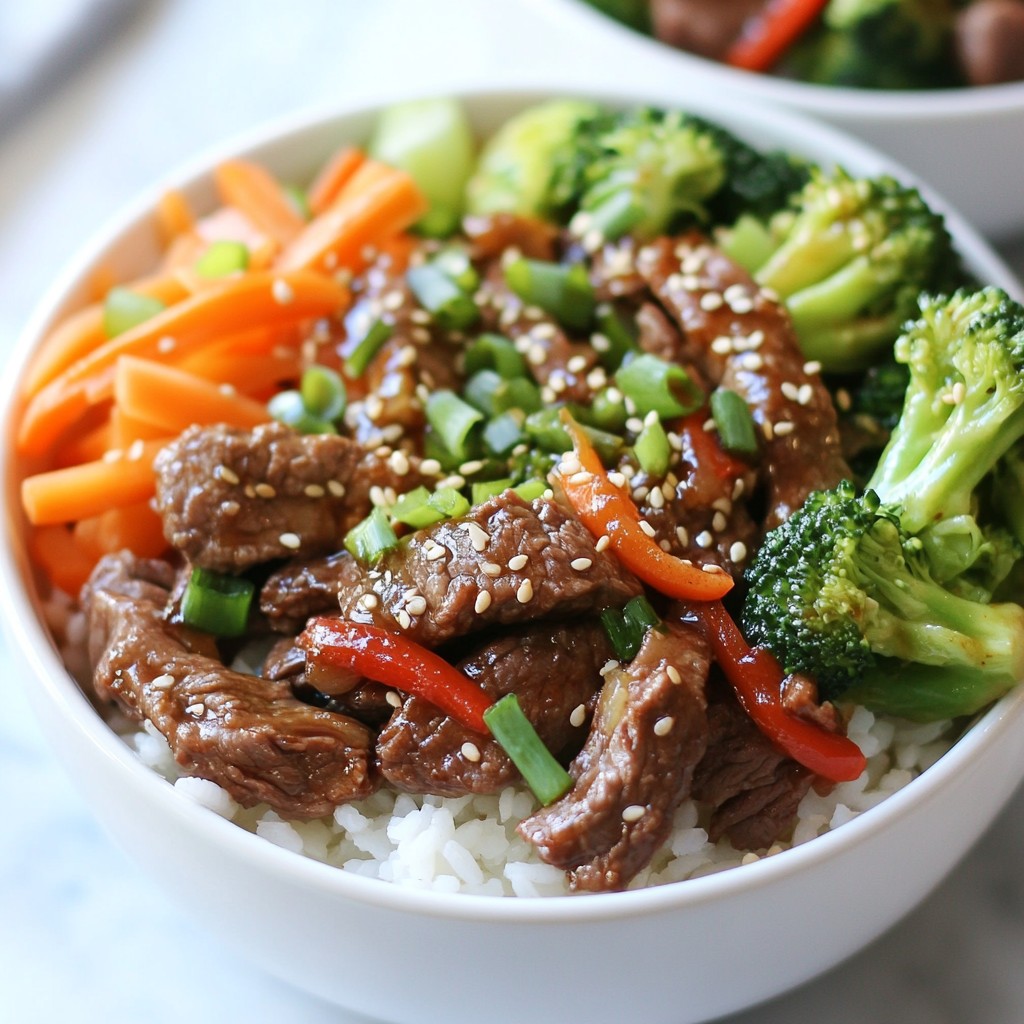
Searching for a delicious and easy meal? Look no further! Korean Beef Bulgogi Bowls are packed with flavor and can be made in no time. You’ll love the tender beef, tasty marinade, and fresh veggies. In this post, I’ll guide you through the simple steps to create this dish, plus tips for making it your own. Let’s dive into this tasty adventure together!
Why I Love This Recipe
- Fresh Flavors: The combination of marinated beef with fresh vegetables creates a vibrant and delicious meal that's sure to impress.
- Quick Preparation: This recipe is easy to prepare and can be made in under 40 minutes, making it perfect for busy weeknights.
- Customizable Bowls: You can easily swap in or out vegetables based on your preferences, making this dish versatile and fun.
- Healthy and Satisfying: With lean beef and nutritious veggies, these bowls are both filling and healthy, perfect for a balanced meal.
Ingredients
Main Ingredients
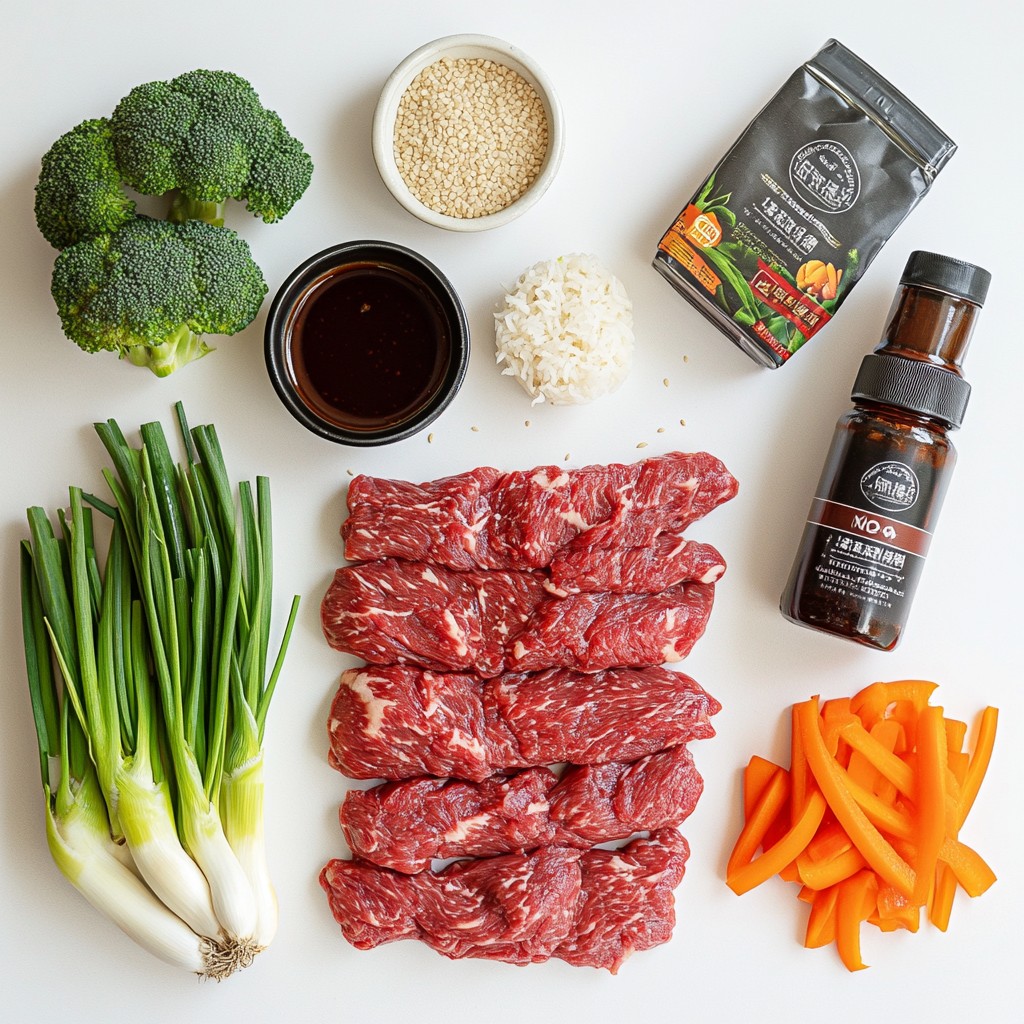
- Beef sirloin: 1 pound, thinly sliced against the grain.
- Marinade components:
- 1/4 cup soy sauce
- 2 tablespoons brown sugar
- 1 tablespoon sesame oil
- 4 cloves garlic, minced
- 1 inch fresh ginger, minced
- 1 tablespoon gochujang (Korean chili paste)
- 1 tablespoon rice vinegar
- 1 teaspoon freshly ground black pepper
- Vegetables and garnishes:
- 1 cup broccoli florets, trimmed
- 1 medium carrot, julienned
- 1 red bell pepper, sliced into thin strips
- 2 green onions, finely chopped
- Sesame seeds for garnish
The beef sirloin is key for great flavor and tenderness. The marinade brings a sweet and savory taste. Each marinade ingredient plays a role. Soy sauce adds salt, while brown sugar gives a hint of sweetness. Sesame oil adds a nutty aroma, and garlic and ginger add depth. Gochujang gives it that spicy kick.
For veggies, broccoli adds crunch and color. Carrots and red bell pepper bring sweetness and brightness. Green onions and sesame seeds top it off, giving your dish a pop!
Gather these ingredients, and you’ll be ready to make a delicious Korean Beef Bulgogi Bowl that is both colorful and flavorful.
Step-by-Step Instructions
Preparing the Marinade
Start by making the marinade. Take a large mixing bowl. Add 1/4 cup soy sauce, 2 tablespoons brown sugar, and 1 tablespoon sesame oil. Then, add 4 cloves of minced garlic and 1 inch of minced ginger. Mix in 1 tablespoon gochujang and 1 tablespoon rice vinegar. Finally, sprinkle in 1 teaspoon of freshly ground black pepper. Whisk these ingredients until the brown sugar dissolves.
Next, it's time to marinate the beef. Place 1 pound of thinly sliced beef sirloin into the bowl. Make sure each piece gets coated well with the marinade. Cover the bowl with plastic wrap. Let it sit for 30 minutes at room temperature or refrigerate it for up to 2 hours. This will enhance the flavor of the beef.
Cooking the Beef
Now, let's cook the beef. Heat a large skillet over medium-high heat. Once hot, add the marinated beef in a single layer. Cook for about 3 to 4 minutes. Stir frequently to ensure even cooking. The beef should be browned and cooked to your liking.
Preparing the Vegetables
While the beef cooks, prepare the vegetables. Start with 1 cup of broccoli florets. Steam them in a pot or a microwave-safe dish for 5 minutes. They should be tender but still bright green. Set the broccoli aside to cool slightly.
Now, grab your julienned carrots and sliced red bell pepper. In the same skillet as the beef, add these veggies. Sauté for about 2 to 3 minutes. You want them to be tender but still a bit crisp.
Assembling the Bowls
Now it’s time to put everything together. Start with a scoop of cooked jasmine rice at the bottom of each bowl. Next, layer the cooked bulgogi beef on top. Add the steamed broccoli next. Finally, finish with the sautéed carrots and red bell pepper.
For a beautiful finish, garnish each bowl. Sprinkle chopped green onions over the top. Add a dusting of sesame seeds for a nice crunch. Your Korean Beef Bulgogi Bowls are now ready to enjoy!
Tips & Tricks
Perfecting the Marinade
To get the best flavor, marinate the beef for at least 30 minutes. If you have time, marinate it for up to 2 hours in the fridge. This extra time makes the beef tender and flavorful. You can also adjust the heat by adding more or less gochujang. Start with one tablespoon for a mild taste. Add more for a spicy kick.
Cooking Techniques
When you sear the beef, use a hot skillet. This helps lock in juices and gives a great crust. Cook the beef in one layer. Avoid overcrowding the pan. This way, it browns nicely. For the vegetables, sauté quickly over high heat. This keeps them crisp and bright. Add them after the beef is nearly done for the best texture.
Serving Suggestions
Serve your Korean Beef Bulgogi Bowls with sides like kimchi or pickled radishes. These add a nice crunch and flavor contrast. For a pretty presentation, use colorful bowls. Layer the rice, beef, and veggies neatly. Top with green onions and sesame seeds for an eye-catching finish. A wedge of lime on the side can add a zesty touch.
Pro Tips
- Marination Magic: Allowing the beef to marinate for the full 2 hours in the refrigerator will deepen the flavors, making each bite more delicious.
- Veggie Crunch: To maintain the crispness of your vegetables, add them to the skillet towards the end of the cooking process, ensuring they cook just enough to stay vibrant.
- Rice Perfection: Use a rice cooker for perfectly fluffy jasmine rice every time, enhancing the overall texture of your bulgogi bowl.
- Garnish Wisely: Experiment with different toppings like sliced radishes or pickled vegetables to add a new layer of flavor and color to your bowls.
Variations
Alternative Proteins
You can swap beef for chicken or tofu in this recipe.
- For chicken, use boneless thighs or breasts. Cut them into thin strips, just like the beef.
- For tofu, choose firm or extra-firm tofu. Press it to remove excess water, then slice it thin.
When cooking chicken or tofu, make sure to adjust the cooking time. Chicken takes about 5 to 7 minutes until it's cooked through. Tofu needs about 4 to 5 minutes until it’s golden brown.
Vegetarian Options
If you want a fully plant-based bowl, skip the meat.
- Use a mix of colorful vegetables like bell peppers, carrots, and zucchini.
- Add mushrooms for a nice umami flavor.
You can also use marinated tempeh instead of meat. It adds protein and flavor. Try to keep the vegetables bright and fresh for best taste and look.
Flavor Enhancements
To make your bowls more exciting, consider adding unique ingredients.
- Mushrooms can add depth to the dish. Shiitake or button mushrooms work well.
- Kimchi brings spice and tang to your meal. It pairs nicely with the savory beef flavors.
Explore variations from different regions, too. For example, adding a bit of sesame seeds or crushed peanuts can give a nice crunch. Each tweak can create a new experience in your bowl!
Storage Info
Storing Leftovers
To keep your Korean beef bulgogi bowls fresh, store the leftovers in airtight containers. This helps prevent moisture loss and keeps flavors intact. You can use glass or plastic containers, but make sure they seal tightly. Divide the rice, beef, and veggies into separate portions. This way, you can mix and match when you eat.
Reheating Instructions
You can reheat the bowls in the microwave or on the stovetop. If using the microwave, place the food in a bowl and cover it with a damp paper towel. This keeps the beef moist. Heat it for 1-2 minutes, stirring halfway through.
For stovetop reheating, warm a skillet over medium heat. Add a splash of water or broth to keep the beef juicy. Stir often for about 5 minutes until everything is hot. This method helps maintain the texture and flavor of the beef and veggies. Enjoy your meal as if it were fresh!
FAQs
What is Bulgogi?
Bulgogi means "fire meat" in Korean. It has a rich history. This dish dates back to the Goguryeo era, over 2,000 years ago. Bulgogi is famous for its sweet and savory flavor. People often enjoy it grilled or stir-fried. It represents Korean hospitality and culture. You often see it at family gatherings and celebrations.
Can I make Korean Beef Bulgogi Bowls ahead of time?
Yes, you can prepare this meal ahead. Marinade the beef the night before. This enhances the flavor. Cook the beef and vegetables close to serving time. You can store the cooked ingredients in the fridge. Keep them in airtight containers for up to three days. Reheat the beef and veggies before serving.
What can I serve with Korean Beef Bulgogi Bowls?
You can serve many tasty sides with these bowls. Here are some ideas:
- Kimchi
- Pickled vegetables
- Cucumber salad
- Steamed dumplings
- Miso soup
These sides add color and flavor to your meal. They also bring out the best in the bulgogi.
How spicy is this recipe?
This recipe has a mild heat level. The gochujang adds flavor, not just spice. If you like it spicier, add more gochujang. You can also add fresh chili peppers. For less heat, reduce the amount of gochujang. Taste as you go to find your perfect balance.
Is this recipe suitable for gluten-free diets?
Yes, you can make this dish gluten-free. Use gluten-free soy sauce instead of regular soy sauce. Check all ingredient labels for hidden gluten. Many rice and vegetable options are naturally gluten-free. Enjoy your bulgogi bowls without worry!
This guide took you through making flavorful Korean Beef Bulgogi Bowls. We started with key ingredients, from tender beef sirloin to fresh veggies. You learned to marinate the beef and cook it just right. Assembling the bowl with care makes it Instagram-ready.
Remember to explore variations, like swapping proteins or adding new flavors. Proper storage and reheating ensure your meal stays tasty. Enjoy creating this dish and share it with friends and family! They will love it.