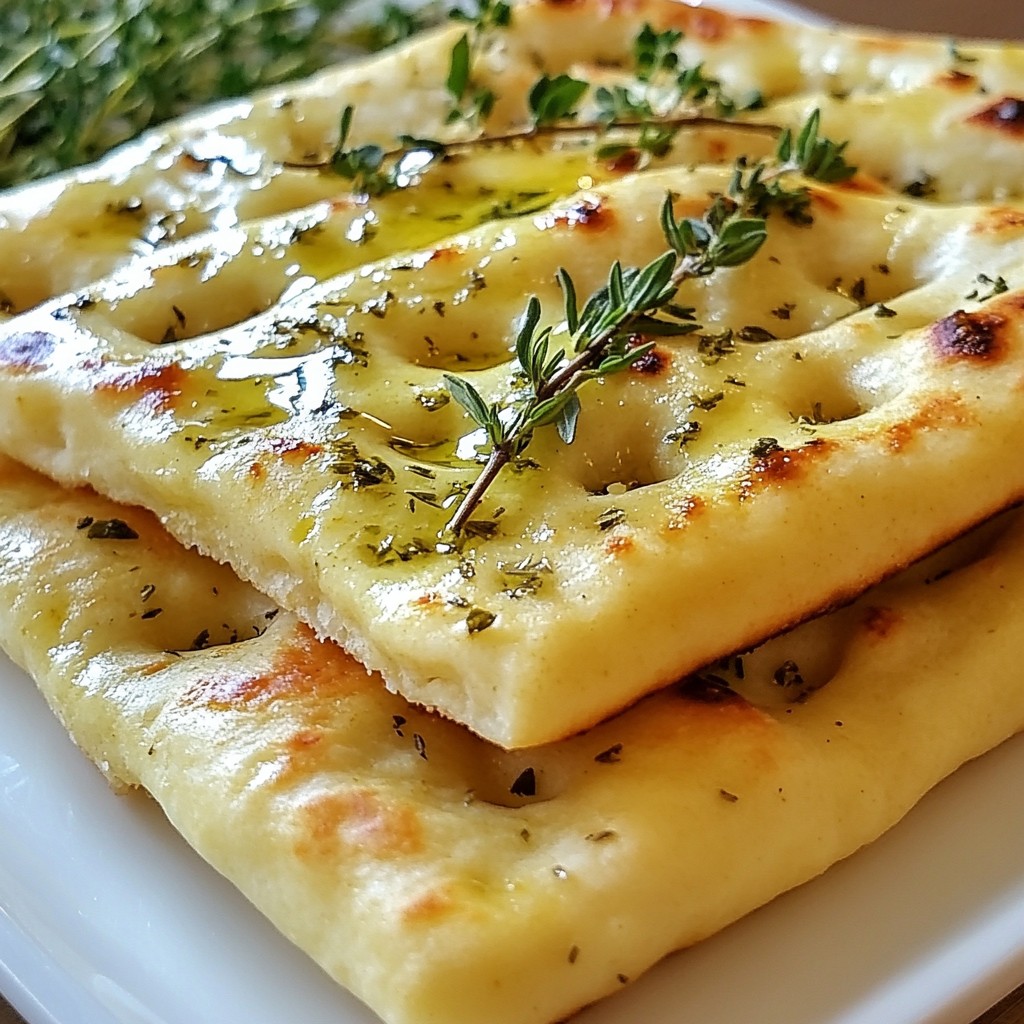
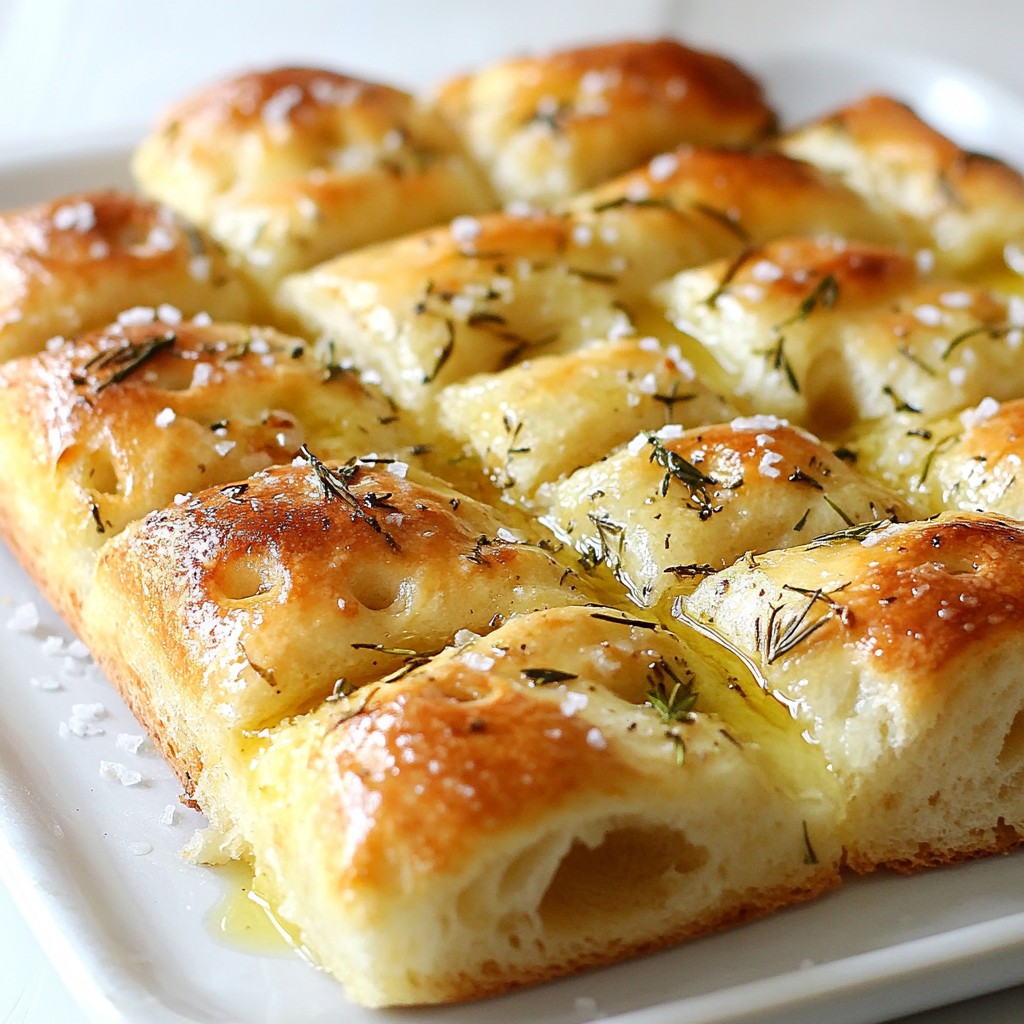
Are you ready to impress your friends and family with an easy, earthy delight? Garlic Herb Focaccia Bread is simple to make and absolutely delicious. In this post, I'll share a step-by-step recipe that ensures you create the perfect focaccia every time. You'll learn about key ingredients, helpful tips, and tasty variations. Let’s dive in and make this Italian classic a staple in your kitchen!
Why I Love This Recipe
- Deliciously Aromatic: The combination of garlic and fresh herbs creates an irresistible aroma that fills your kitchen and invites everyone to the table.
- Texture Heaven: The focaccia's crispy crust and soft, airy interior provide a delightful texture that is perfect for dipping or enjoying on its own.
- Customizable: This recipe serves as a fantastic base, allowing you to experiment with different herbs, toppings, or even add cheese to suit your taste.
- Perfect for Sharing: With its generous size and inviting presentation, this focaccia is perfect for gatherings, making it a great addition to any meal or party.
Ingredients
Main ingredients overview
- 4 cups all-purpose flour
- 2 teaspoons instant yeast
- 1 tablespoon sugar
- 1 tablespoon salt
- 1/4 cup olive oil
- 1 1/2 cups warm water
To make garlic herb focaccia, you need a few key ingredients. The base is all-purpose flour. It gives the bread its structure. Instant yeast helps the dough rise quickly. Sugar adds a touch of sweetness. Salt enhances all the flavors. Olive oil brings richness and moisture. Warm water activates the yeast, making it bubbly.
Herbs and garnishes
- 4 cloves garlic, finely minced
- 2 tablespoons fresh rosemary, finely chopped
- 2 tablespoons fresh parsley, finely chopped
- Coarse sea salt for topping
Herbs play a big role in this recipe. Garlic adds a strong punch. Fresh rosemary gives a lovely aroma. Parsley adds color and freshness. Coarse sea salt on top creates a nice crunch. These ingredients work together to make every bite flavorful and exciting.
Step-by-Step Instructions
Activating the yeast
To start, you need warm water, sugar, and yeast. In a large bowl, mix 1 ½ cups of warm water with 1 tablespoon of sugar and 2 teaspoons of instant yeast. Stir gently and let it sit for about 5-10 minutes. You want to see bubbles form on top. This frothiness means your yeast is ready to help the dough rise.
Preparing the dough
Next, add 4 cups of all-purpose flour, 1 tablespoon of salt, and ¼ cup of olive oil to the yeast mixture. Mix these together until you see a shaggy dough form. Now, transfer the dough to a floured surface. Knead it for 5-7 minutes. Press and fold the dough until it feels smooth and elastic. This step is key for a good texture.
First rise and shaping
Once the dough is ready, place it in a greased bowl. Cover it with a damp cloth. Let it rise in a warm place for 1-2 hours. You want it to double in size. After it has risen, gently punch it down. This releases some air. Now, transfer the dough to a greased baking sheet or pan. Use your fingers to stretch the dough to fill the pan.
Adding toppings
Now comes the fun part! In a small bowl, mix 4 minced garlic cloves, 2 tablespoons of chopped rosemary, and 2 tablespoons of chopped parsley with a couple of tablespoons of olive oil. Brush this herb mix over the dough. Make dimples all over the surface with your fingertips. Then, sprinkle coarse sea salt on top. This adds flavor and crunch.
Baking the focaccia
Before baking, preheat your oven to 425°F (220°C). This ensures it is hot when the dough is ready. Let the dough rest for another 20-30 minutes. You want it to puff up a bit. Bake the focaccia for 20-25 minutes. It should turn golden brown and smell amazing. When it's done, let it cool slightly on a wire rack before slicing. Enjoy your warm, delicious focaccia!
Tips & Tricks
Common mistakes to avoid
- Over-kneading vs. under-kneading: Kneading is key to good bread. If you knead too little, the dough stays sticky and won’t rise well. You want a smooth, elastic dough. Knead for about 5-7 minutes. If you over-knead, the bread may turn tough. Pay attention to the feel.
- Checking yeast freshness: Always check that your yeast is fresh. Old yeast won’t make your bread rise. To test it, mix it with warm water and sugar. If it bubbles after 10 minutes, it’s good to use.
Perfecting the texture
- Tips for achieving a crispy crust: For a crispy crust, use a hot oven. Preheat it to 425°F (220°C). You can also add a pan of water to create steam. This helps get that golden, crunchy crust we all love.
- Importance of proper resting times: Resting your dough matters. After shaping, let it rise for 20-30 minutes before baking. This helps create a light and airy texture. Don’t skip this step!
Flavor enhancement suggestions
- Alternative herbs or spices: Want to mix it up? Try adding thyme or oregano. You can even use chili flakes for a spicy kick. Experimenting makes your bread unique and fun.
- Using infused oils for varied taste: Infused oils add great flavor. Use garlic-infused or rosemary oil for a richer taste. Just brush it on before baking for a burst of flavor.
Pro Tips
- Use Fresh Herbs: Fresh herbs like rosemary and parsley will enhance the flavor of your focaccia significantly compared to dried herbs.
- Perfect Dimpling: When creating dimples in the dough, be gentle to avoid deflating it too much; this helps create a nice texture.
- Olive Oil Drizzle: Don’t skimp on the olive oil for the topping; it adds richness and helps achieve a crispy crust.
- Cooling Properly: Allow the focaccia to cool on a wire rack to prevent it from becoming soggy at the bottom.
Variations
Flavor-packed options
You can add olives or sun-dried tomatoes to boost flavor. These ingredients give a nice briny taste. You can use black olives or green olives based on your choice. Sun-dried tomatoes add a sweet and tangy flavor that pairs well with the herbs. Another great option is to include cheese. Try parmesan or feta for a creamy touch. Cheese melts beautifully and adds richness to each bite.
Dietary adjustments
If you need a gluten-free option, use a gluten-free flour blend. Make sure to check if the blend has xanthan gum. This will help mimic the texture of regular focaccia. For a vegan version, replace the honey with maple syrup. You can also use a plant-based oil instead of olive oil. This way, you keep the taste while meeting dietary needs.
Cultural inspirations
You can take inspiration from different cultures. For an Italian twist, add Italian seasoning or garlic confit. This gives the bread a robust flavor. If you want a Mediterranean vibe, mix in herbs like oregano and thyme. You can also top it with za'atar spice for a Middle Eastern flair. These variations let you explore different tastes while enjoying the classic focaccia texture.
Storage Info
Short-term storage
To keep your focaccia fresh for up to 3 days, follow these easy steps. First, let the focaccia cool completely after baking. Once cool, wrap it tightly in plastic wrap or foil. You can also place it in an airtight container. This keeps moisture in and prevents it from drying out. Store it at room temperature, away from direct sunlight. If you notice the focaccia becoming too soft, you can pop it in a toaster or oven for a quick refresh.
Long-term storage
For longer preservation, freezing is your best bet. After the focaccia cools, slice it into pieces. Wrap each piece tightly in plastic wrap, then place them in a freezer bag. Squeeze out as much air as possible before sealing. This prevents freezer burn. You can freeze focaccia for up to 3 months.
When you're ready to eat it, reheating is key. Preheat your oven to 375°F (190°C). Remove the focaccia from the freezer and unwrap it. Place it on a baking sheet and cover it with foil. Heat for about 10-15 minutes. This warms it up and keeps it soft. For a crispy crust, remove the foil for the last few minutes. Enjoy your delicious focaccia just like fresh!
FAQs
How do I know if my yeast is still good?
To test your yeast, mix it with warm water and sugar. Wait for 5-10 minutes. If it bubbles and foams, your yeast is active. If not, it may be dead. Use fresh yeast for the best results in your focaccia.
Can I use bread flour instead of all-purpose flour?
You can use bread flour, but it will change the texture. Bread flour has more protein, making the focaccia chewier. All-purpose flour gives a lighter, softer bread. Both will taste great, but the texture will differ.
Is it necessary to use fresh herbs?
Fresh herbs add bright flavors to your focaccia. They have a stronger taste than dried herbs. If you only have dried herbs, you can use them, but reduce the amount. Fresh herbs make a big difference in flavor and aroma.
How long can I keep leftover focaccia?
Store leftover focaccia at room temperature for up to 3 days. Wrap it in plastic wrap or place it in a sealed bag. For longer storage, freeze it for up to 3 months. Reheat in the oven for a fresh taste.
This blog post covered how to make delicious focaccia. We explored the key ingredients, step-by-step instructions, useful tips, and tasty variations. I hope you feel equipped to try this recipe at home. Remember, proper technique and fresh ingredients make a big difference. Enjoy experimenting with flavors to find your perfect focaccia. Happy baking!