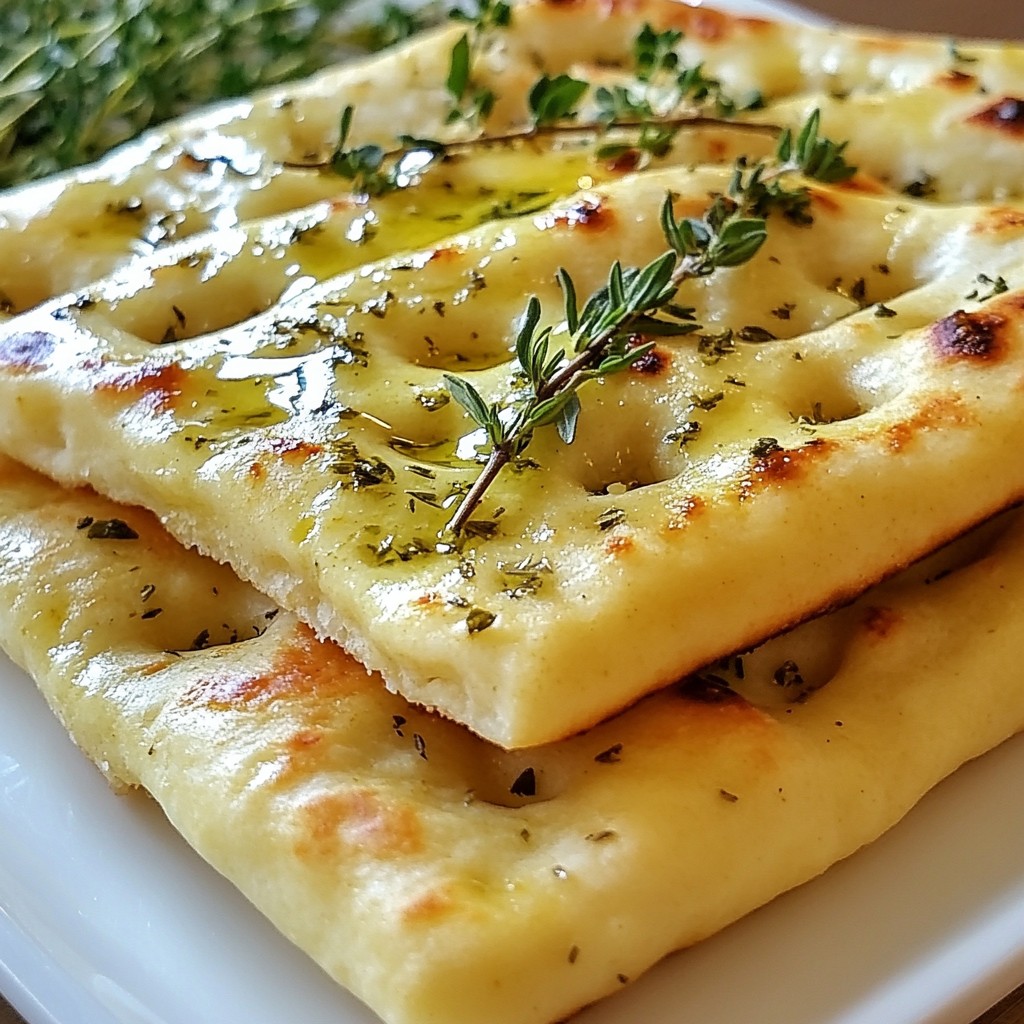
If you crave a simple yet tasty treat, this Garlic Herb Flatbread recipe is for you! It's packed with flavor and easy to make, perfect for any meal or snack. In just a few steps, you’ll create a warm, fluffy flatbread that pairs well with many dishes. Let me guide you through the ingredients and steps to make this delightful addition to your kitchen. Ready to impress your taste buds? Let’s dive in!
Why I Love This Recipe
- Fresh and Flavorful: This flatbread is infused with aromatic herbs and garlic that create an irresistible fragrance and taste.
- Quick and Easy: With minimal ingredients and straightforward steps, this recipe is perfect for a quick homemade bread option.
- Versatile: Enjoy it on its own, as a side, or with dips – this flatbread complements a wide range of dishes.
- Customizable: Easily modify the herb blend to suit your taste or use up whatever fresh herbs you have on hand.
Ingredients
Essential Ingredients for Garlic Herb Flatbread
To make Garlic Herb Flatbread, you need a few key items. Here’s what you’ll need:
- 2 cups all-purpose flour
- 1 teaspoon salt
- 1 teaspoon baking powder
- 1 tablespoon olive oil (for dough)
- 3/4 cup warm water
- 4 cloves garlic, finely minced
- 2 tablespoons fresh parsley, finely chopped
- 1 tablespoon fresh rosemary, finely chopped
- 1 tablespoon fresh thyme leaves
- 1 tablespoon olive oil (for brushing)
These ingredients come together to create a soft, tasty flatbread with rich garlic and herb flavors.
Optional Ingredients for Enhanced Flavor
While the essential ingredients make a great flatbread, you can add more for extra taste. Consider these options:
- Coarse sea salt for sprinkling
- A drizzle of olive oil in the garlic herb mixture
These simple additions can take your flatbread to the next level, making it more flavorful and visually appealing.
Substitutions and Recommendations
If you lack any essential items, don’t worry! Here are some substitutions you can use:
- Whole wheat flour instead of all-purpose flour for a heartier texture.
- Use garlic powder if you don’t have fresh garlic; adjust the amount to taste.
- Any mix of fresh herbs can work well, like basil or oregano.
Feel free to experiment with flavors you love. Cooking should be fun and personal!

Step-by-Step Instructions
Preparation of Dough
To start, gather your ingredients. You need:
- 2 cups all-purpose flour
- 1 teaspoon salt
- 1 teaspoon baking powder
- 1 tablespoon olive oil (for dough)
- 3/4 cup warm water
1. In a large bowl, mix the flour, salt, and baking powder. Whisk them well.
2. Add 1 tablespoon of olive oil. Use your fingers to mix until it looks like coarse crumbs.
3. Gradually pour in the warm water. Stir gently until the dough is soft and sticky.
4. Transfer the dough to a floured surface. Knead it for 5-7 minutes until smooth and elastic.
5. Cover the dough with a kitchen towel. Let it rest for 30 minutes. This makes it easier to roll out.
Cooking the Flatbread
Now that the dough is ready, divide it into 4 equal pieces. Roll each piece into a circle about 1/4 inch thick. You will also need:
- 4 cloves garlic, finely minced
- 2 tablespoons fresh parsley, finely chopped
- 1 tablespoon fresh rosemary, finely chopped
- 1 tablespoon fresh thyme leaves
- 1 tablespoon olive oil (for brushing)
1. Preheat a skillet over medium-high heat.
2. In a bowl, mix the minced garlic, parsley, rosemary, and thyme. Add a bit of olive oil to help it spread.
3. Place one rolled flatbread onto the hot skillet. Cook for 2-3 minutes. Look for bubbles forming.
4. Flip the flatbread. Quickly spread some of your garlic herb mix on top. Cook for another 2-3 minutes until golden.
Repeat this for the other dough pieces. If you want, brush each flatbread with olive oil and sprinkle with coarse sea salt while warm.
Best Practices for Achieving Perfect Texture
To get the best texture, remember these tips:
- Knead the dough until smooth. This develops gluten, making the flatbread chewy.
- Let the dough rest. This relaxes the gluten and makes rolling easier.
- Watch the heat. A hot skillet helps the flatbread puff up and cook evenly.
- Flip carefully. Avoid pressing down to keep it fluffy.
These steps ensure a perfect garlic herb flatbread every time!
Tips & Tricks
Common Mistakes to Avoid
When making garlic herb flatbread, some common mistakes can ruin your dish.
- Not measuring ingredients: Be precise with flour, water, and salt.
- Skipping the resting time: Allow the dough to rest for 30 minutes. This helps the gluten relax.
- Cooking on too high heat: A medium-high heat is best. Too hot can burn the flatbread.
Avoid these mistakes for better results.
How to Perfectly Infuse Garlic and Herbs
To get the best flavor from garlic and herbs, follow these steps:
- Use fresh herbs: Fresh parsley, rosemary, and thyme have strong flavors.
- Minced garlic: Finely mince the garlic for even distribution.
- Mix with olive oil: Combine minced garlic and herbs with olive oil. This helps spread the flavor.
Make sure to spread this mixture right after flipping the flatbread. This way, the heat will activate the aromas.
Serving Suggestions for Garlic Herb Flatbread
Garlic herb flatbread shines when served well. Here are some fun ideas:
- Dipping oil: Serve with a bowl of olive oil for dipping.
- Toppings: Try adding sliced tomatoes or cheese on top.
- Wraps: Use flatbread as a wrap for grilled veggies or meats.
Stack the flatbreads on a platter and garnish with fresh herbs. This adds color and makes it look amazing.
Pro Tips
- Use Fresh Herbs: Fresh herbs like parsley, rosemary, and thyme significantly enhance the flavor of your flatbread. Make sure to chop them finely to distribute their essence evenly.
- Don’t Overcook: Keep an eye on the cooking time to avoid burning the flatbreads. They should be golden brown and cooked through but still soft in the center.
- Resting the Dough: Allowing the dough to rest is crucial as it helps relax the gluten, making it easier to roll out and resulting in a softer flatbread.
- Experiment with Toppings: Feel free to customize the garlic herb mixture by adding different spices or cheeses to match your personal taste or to complement your meal.
Variations
Gluten-Free Garlic Herb Flatbread Options
You can make this flatbread gluten-free. Use gluten-free flour blends instead of all-purpose flour. Make sure the blend has a good rise. Look for one that includes xanthan gum to help with texture. Mixing in a bit of almond flour can also add a nice flavor.
Flavorful Additions to Try
You can boost the taste of your flatbread with fun extras. Try adding cheese for a rich flavor. Feta or goat cheese works great. You can also mix in sun-dried tomatoes or olives. For a spicy kick, add red pepper flakes to the herb mixture.
Different Cooking Methods: Oven vs. Skillet
You can cook flatbread in two ways: on the skillet or in the oven. Cooking in a skillet gives a nice char and is quick. Heat the skillet until it’s hot, and watch for bubbles.
If you want a softer flatbread, use the oven. Preheat it to 450°F. Place the flatbread on a baking sheet and bake for about 5-7 minutes. You’ll get a fluffy texture this way. Both methods are tasty, so choose what you prefer!
Storage Info
Best Ways to Store Uncooked Dough
To keep your uncooked dough fresh, wrap it well in plastic wrap. This helps prevent it from drying out. Place the wrapped dough in the fridge if you plan to use it within a day. For longer storage, you can freeze it. Just make sure to use a freezer-safe bag or container. When you’re ready to use it, let it thaw in the fridge overnight.
Cooling and Storing Cooked Flatbread
After cooking, let your flatbread cool down on a wire rack. This stops steam from making it soggy. Once cooled, you can stack the flatbreads in an airtight container. If you plan to eat them later, add parchment paper between each flatbread. This keeps them from sticking together. Store them in the fridge for up to three days.
Reheating Tips for Optimal Freshness
To reheat your flatbread, you can use a skillet or an oven. For the skillet, heat it over medium heat. Place the flatbread in the skillet for about 1-2 minutes on each side. For the oven, preheat it to 350°F (175°C). Place the flatbread on a baking sheet for about 5-7 minutes. This will keep them warm and soft. Enjoy your flatbread as if it was fresh out of the pan!
FAQs
How do I make Garlic Herb Flatbread without yeast?
To make Garlic Herb Flatbread without yeast, you can use baking powder as a leavening agent. This method creates a quick and easy dough. Combine flour, salt, and baking powder in a bowl. Add olive oil and warm water, then mix until a soft dough forms. Knead it for about 5-7 minutes. Let it rest for 30 minutes before rolling it out. This process gives you a flatbread that is light and fluffy without using yeast.
Can I use dried herbs instead of fresh?
Yes, you can use dried herbs instead of fresh. Dried herbs have a stronger flavor, so use less. For instance, use 1 teaspoon of dried herbs in place of 1 tablespoon of fresh herbs. Mix the dried herbs in with the dry ingredients when making the dough. This change still gives you a tasty flatbread, even if fresh herbs are preferred.
Where can I buy pre-made Garlic Herb Flatbread?
You can find pre-made Garlic Herb Flatbread in many grocery stores. Look in the bakery section or the frozen food area. Some stores may even have it in the deli section. Brands may vary, so check the ingredients to ensure quality. If you want a quick meal, pre-made flatbreads are a great option.
Garlic herb flatbread is simple and fun to make. We went over the must-have ingredients, tips for dough prep, and cooking methods. You learned how to avoid common mistakes and enhance flavors. Plus, I shared variations and storage tips to keep your flatbread fresh.
With these steps, you'll enjoy delicious flatbread any time. Try your unique twists and make it yours. Happy baking!